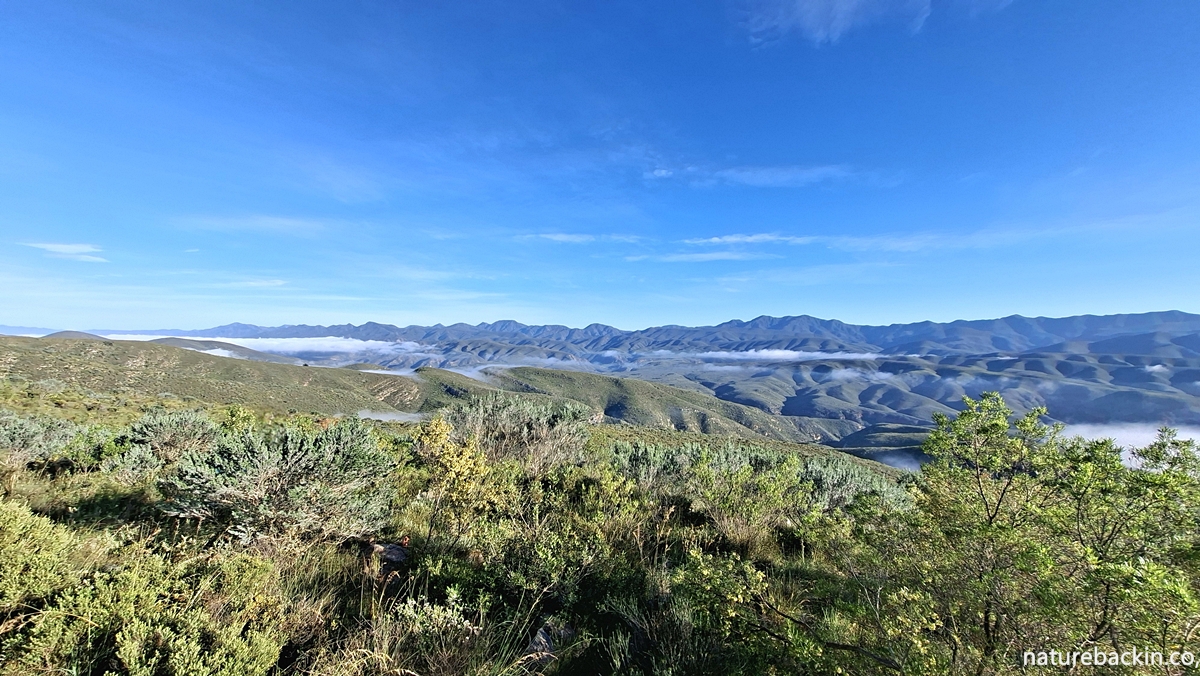
We took a break not far from Joubertina in a mountain cabin overlooking the Kouga and Baviaanskloof Mountains. The place is special in every way, with the secluded cabin being high up on its own with superb views and surrounded by an incredible array of plants, many flowering in the early summertime.
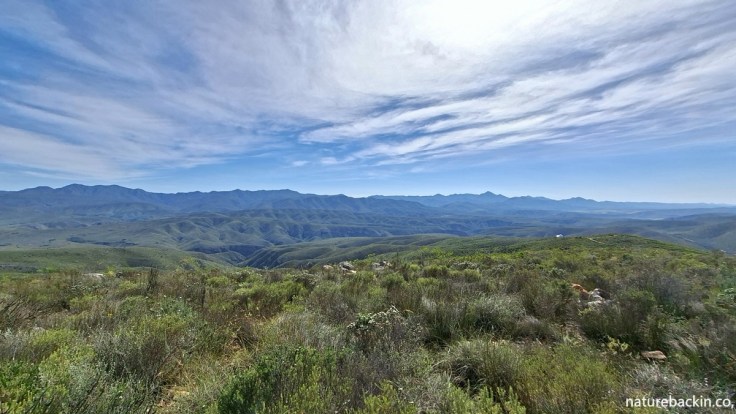
The small white blob towards the right of the photo is the isolated mountain cabin. Several walking trails lead out from the cabin.
We stayed three nights and in that short time we saw the weather change from misty to clear, from windy to calm, and back again. We saw flowers in bloom for only one day and we saw the light constantly changing and the clouds shifting as we watched.
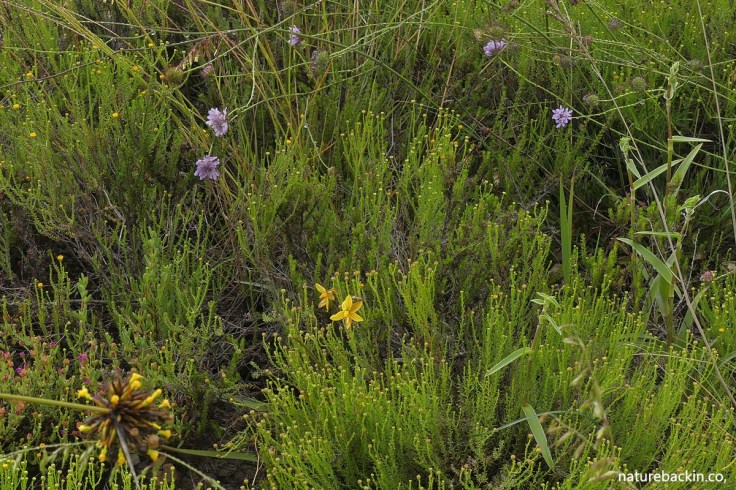
The variety of plants, many in flower, was entrancing. Provided in the cabin we stayed in, a reference book, Plants of the Baviaanskloof by Douglas Euston-Brown and Magriet Kruger, helpfully informed me that the region supports a mosaic of several types of fynbos, including grassy fynbos, mesic fynbos, sour fynbos, transitional fynbos and mountain fynbos, in addition to renosterveld, thicket and forest patches.
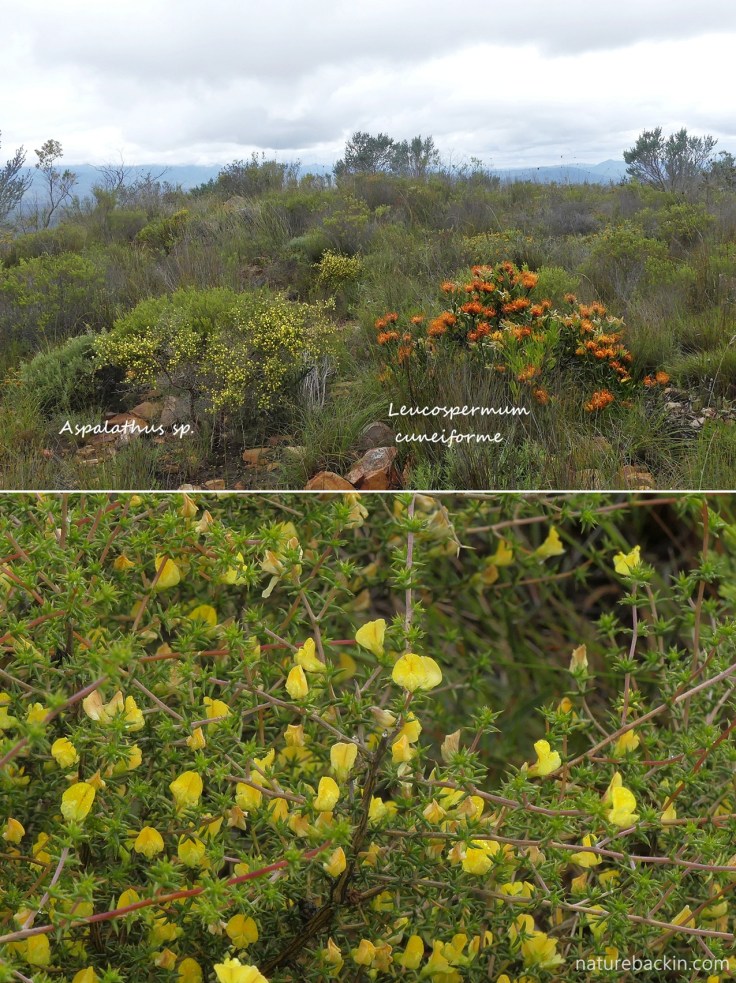
Many yellow Cape gorse bushes (a species of Aspalathus) were flowering profusely, often in close company with the showy wartstem pincushion (Leucospernum cuneiforme) that has flowerheads turning from yellow to orange as they age.
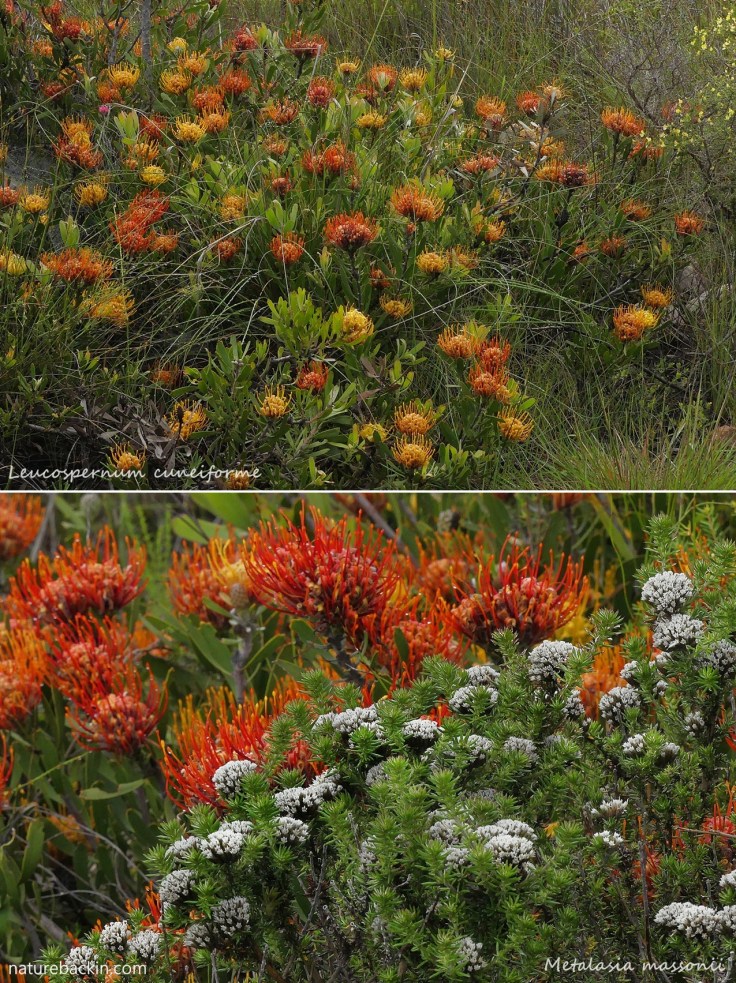
The strong orange of the pincushion flowers (Leucospernum cuneiforme) makes a pleasing contrast to the white flowers of the doll blombush (Metalasia massonii).
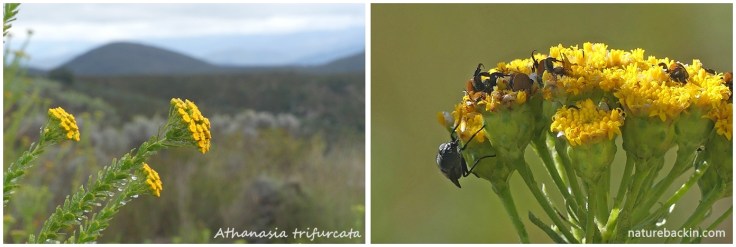
The three-tooth kanniedood (Athanasia trifurcata) grow surprisingly tall in this region. The flowers are popular with a variety of pollinators, including monkey beetles, which we saw burying their heads deep into the flowers as they ate. In the process of burrowing the beetles become coated in pollen and so play an important pollinating role as they move between the flowers. I saw also a visiting fly. Though likely in search of nectar, the fly also plays a pollinating role.
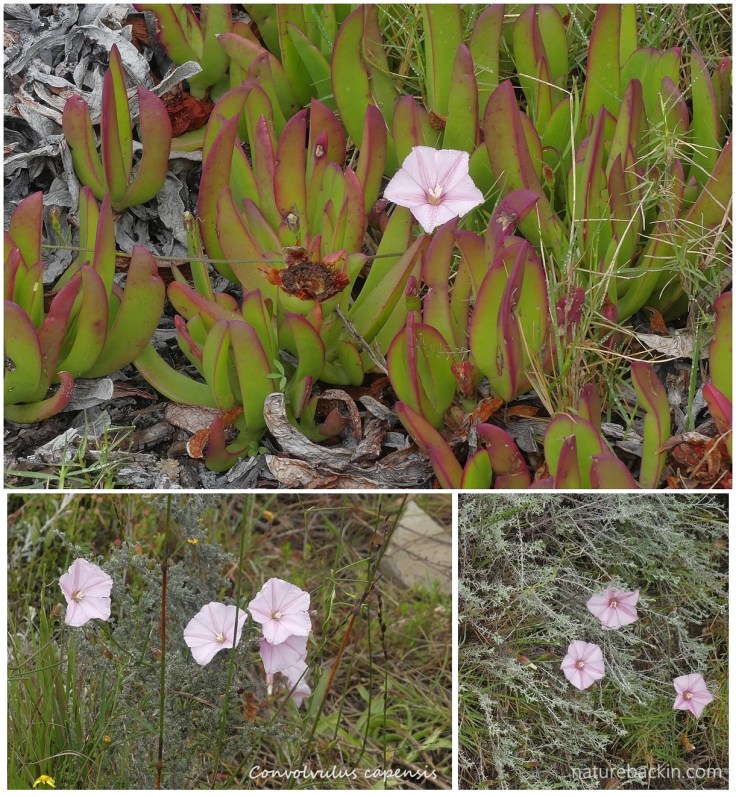
The delicate pink flowers of the Cape bindweed (Convolvulus capensis) were even more lovely when fringed with dewdrops from the mist. In the top photo above, a flower protrudes above the triangular succulent leaves rimmed in red of a species of sour fig (probably a Carpobrotus sp.).
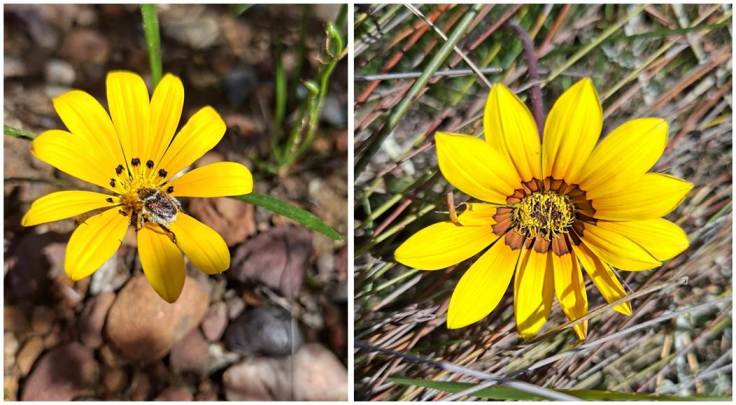
Monkey beetles (a type of scarab beetle, likely in the genus Heterochelus) when foraging for pollen also visit the flowers of gazanias. The cheerful flowers of two wild gazania species are pictured above.
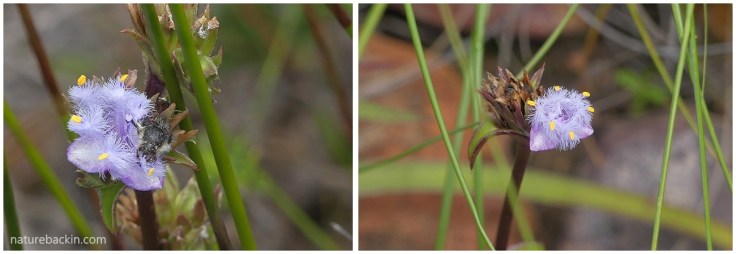
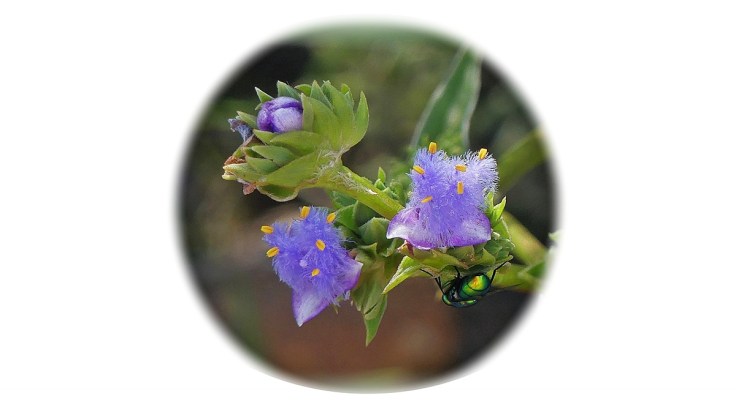
We were particularly smitten by the flowers of the doll’s powderpuff (Cyanotis speciosa) with luxuriantly fluffy stamens and vibrant yellow anthers. The flower in the photo on the left above, is also being visited by a monkey beetle. The flowers of the Cyanotis speciosa may be blue, pink or purple. Growing from rhizomes, this plant flourishes in grassland, bushveld, fynbos and coastal areas in summer rainfall areas in the more eastern regions of southern Africa, and northwards to Tanzania and also in Madagascar. We were just far enough east to be in the transitional zone between winter and summer rainfall areas.
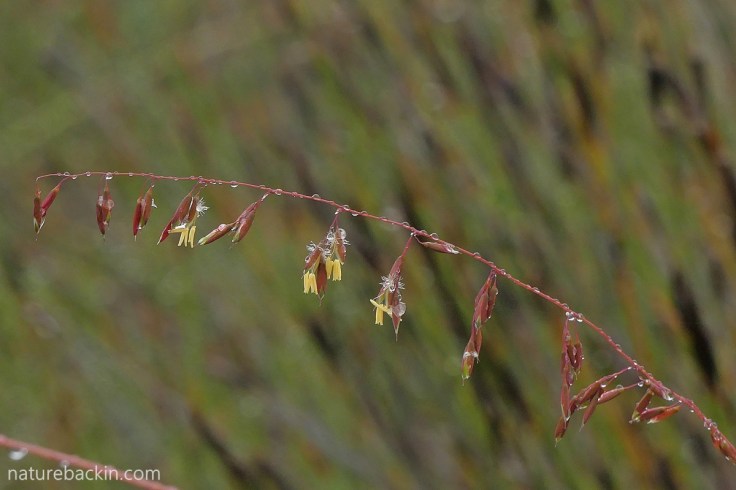
Another reason I enjoyed our visit to the Eastern Cape region is that there are more grasses growing there than in the part of the Western Cape where I now live. This graceful stem of grass has delicate flowers that I photographed with drops from the early morning mist still clinging to it. It is perennial veldtgrass (Ehrharta calycina). Sanbi’s PlantZAfrica records that this grass species is native to southern Africa, but it has been introduced to many other parts of the world where it has become an invasive weed.
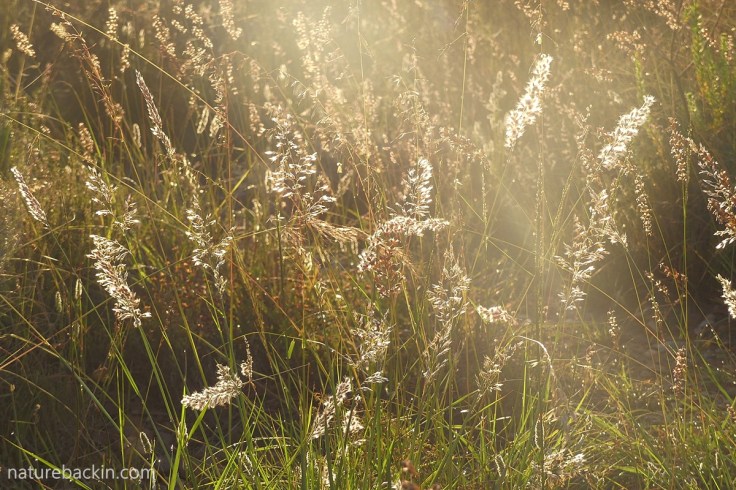
Growing just outside the mountain cabin, I photographed wild grasses backlit by the early morning sun.
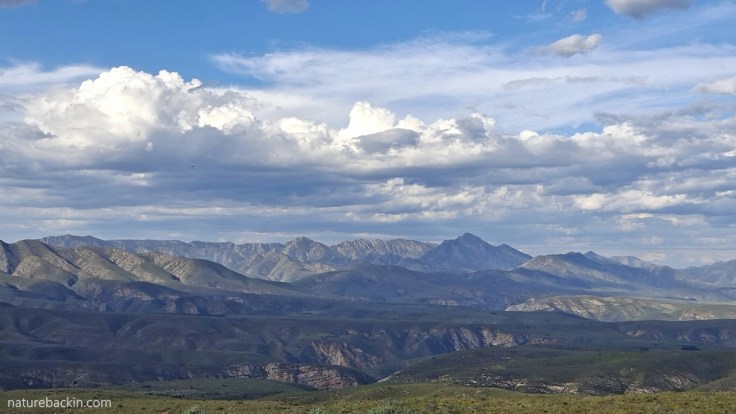
The panaromic view of the mountains from the veranda of the cabin changed character constantly as the light changed. This photo was taken in the later part of the afternoon with cloudy skies adding another dimension.
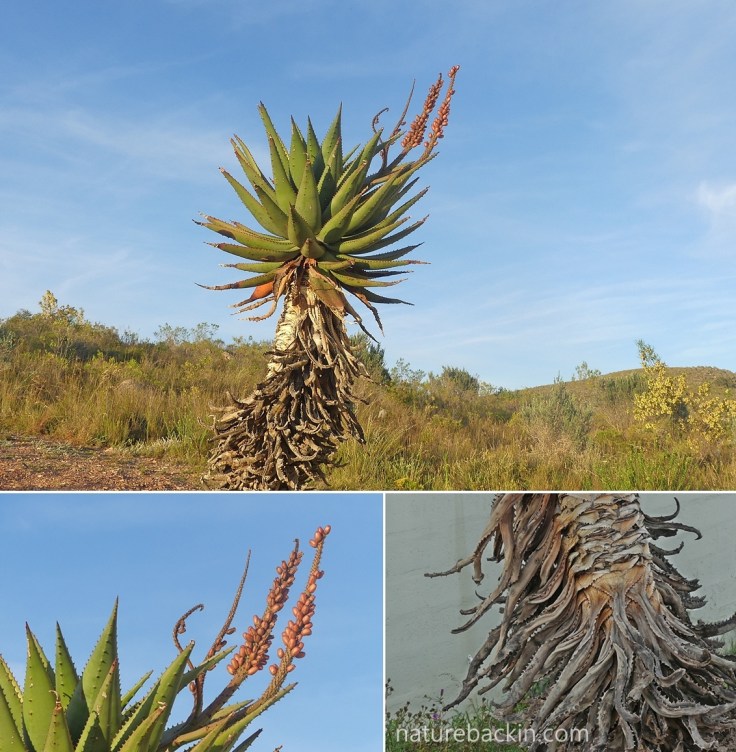
A tall bitter aloe (Aloe ferox) showing off its fruits, and a close-up of another plant showing its skirt or petticoat of old dry leaves. The bitter juice from the leaves is used medicinally as a laxative and the juice is also used in a gel to treat skin conditions.
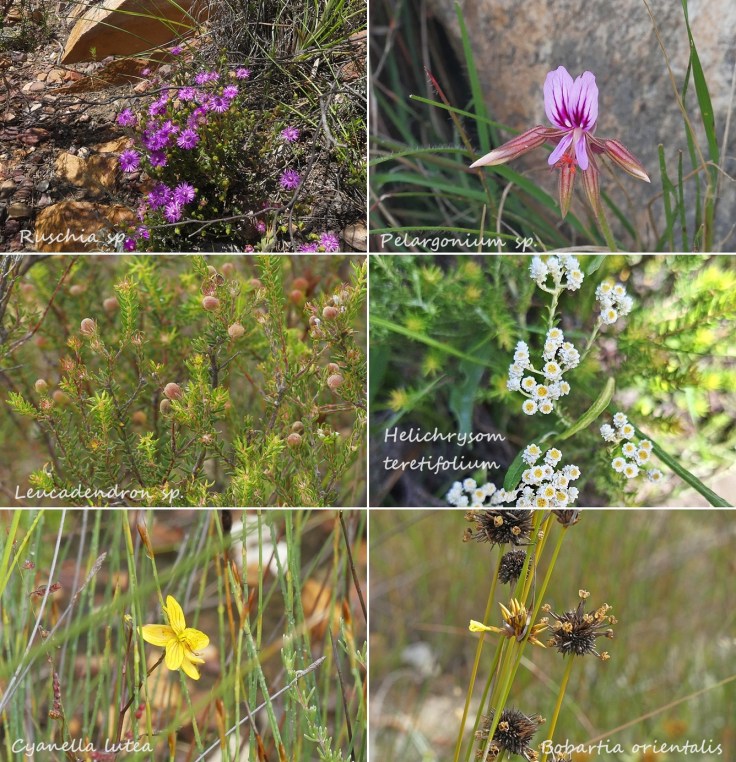
A selection of flowers, clockwise from top left: 💮 a species of Ruschia known as beesvygies; 💮 a flower of one of the many Pelargonium species; 💮 a lovely species of coneflower (Leucadendron); 💮 known as “five fingers” or lady’s hand, Cyanella lutea; 💮 flowerheads going to seed of the eastern rushiris (Bobartia orientalis).
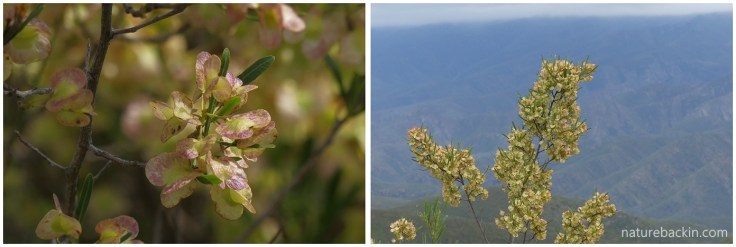
Known in South Africa as the sand olive, Dodonaea viscosa is known elsewhere as akeake. It is a cosmopolitan plant and is not endemic to South Africa. It is widespread across South Africa and grows in a variety of habitats. The roots and leaves are used in a variety of traditional medicines. These plants are fruiting and each fruit has papery wings.
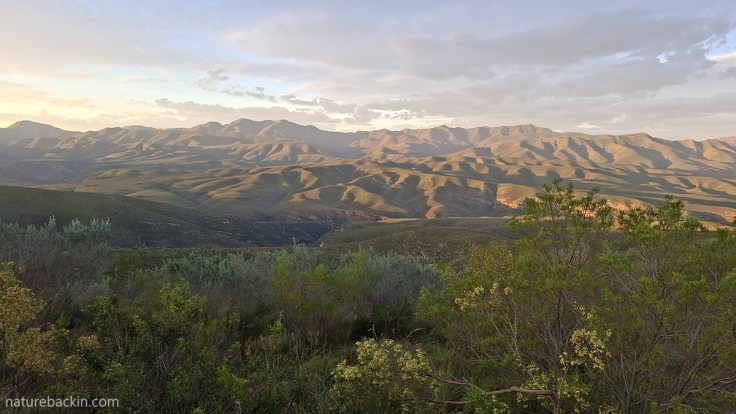
Mountain view in the late afternoon. A sand olive can be seen in the foreground.
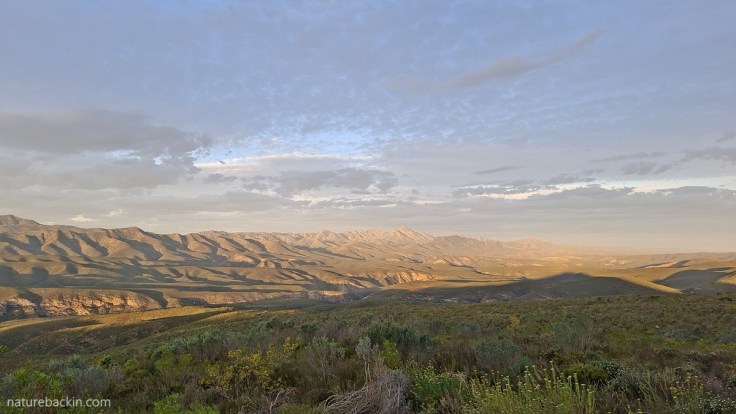
A wider view looking towards the east in the late afternoon.
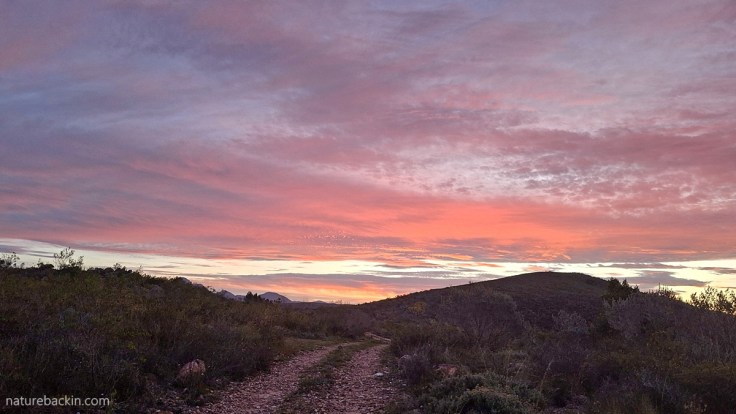
And looking west just after sunset.
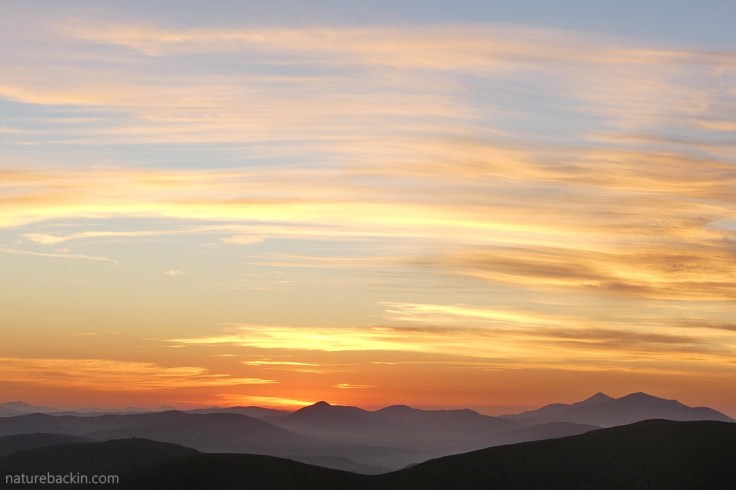
Sunrise the following morning.
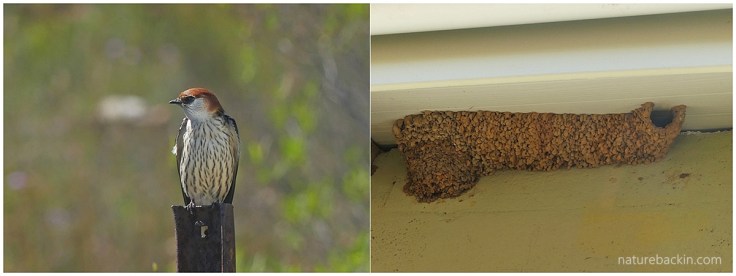
A greater-striped swallow (Cecropis cucullata) photographed as it perched on a post near the cabin in early morning sunshine. This bird is one of a pair that was nesting under the eaves of the cabin.
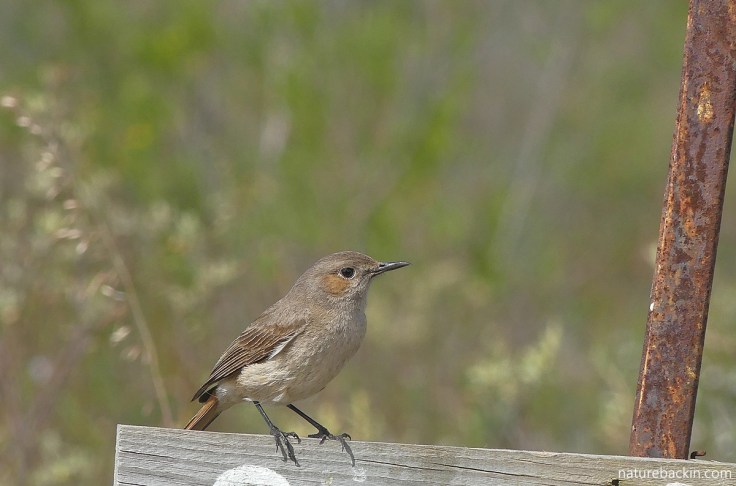
Also seen in the vicinity of the cabin was this familiar chat (Oenanthe familiaris).
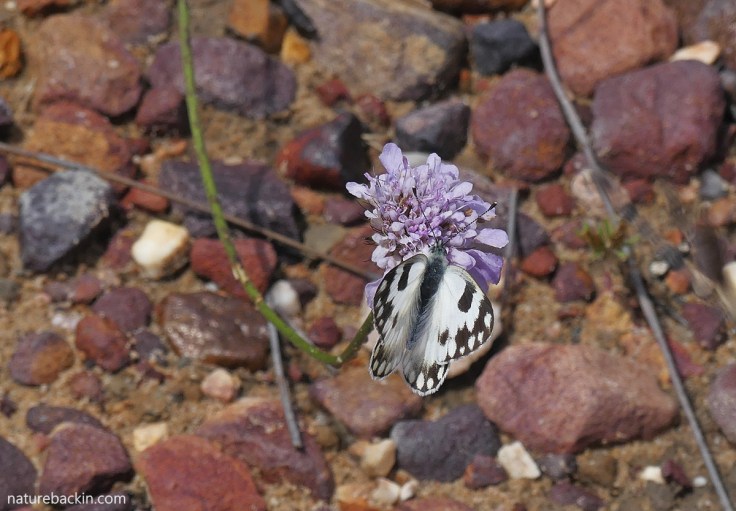
So engrossed in nectaring from a scabiosa flower (Scabiosa columbaria), this African meadow white butterfly (Pontia helice) remained on the flower while I edged close enough to take this photo.
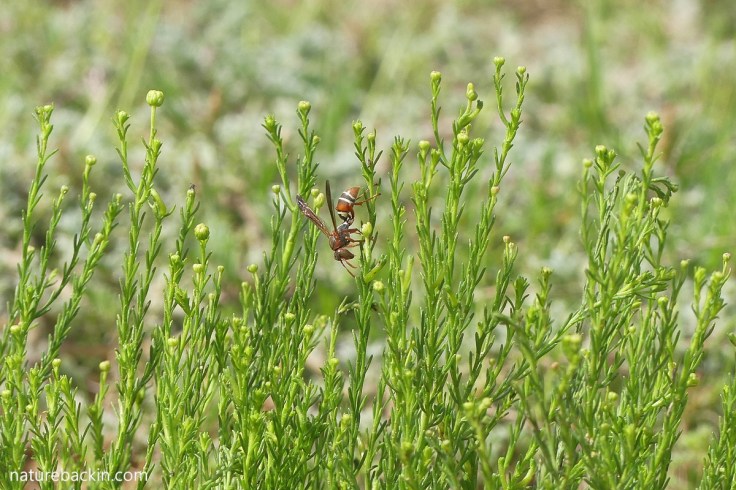
While I was sitting on the ground to photograph some flowers, this wasp landed nearby and caught my attention. It is Polistes marginalis, one of the paper wasps, and it occurs in sub-Saharan Africa.
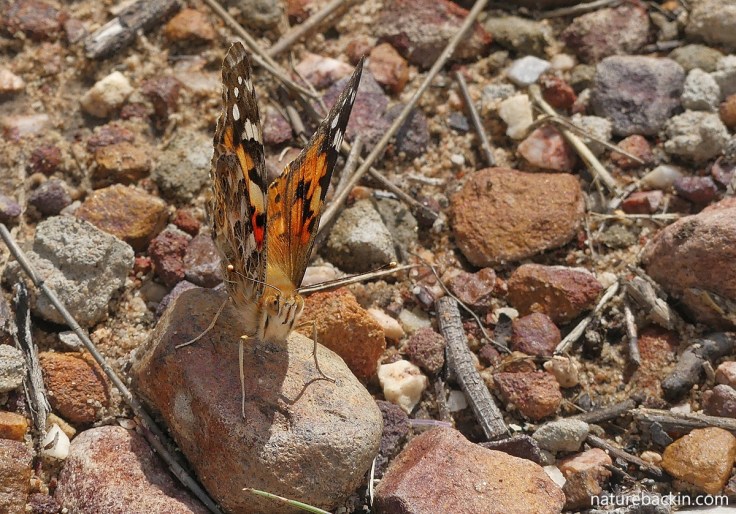
A painted lady butterfly (Vanessa cardui) settled on a nearby pebble to indulge in a spot of sunbathing.
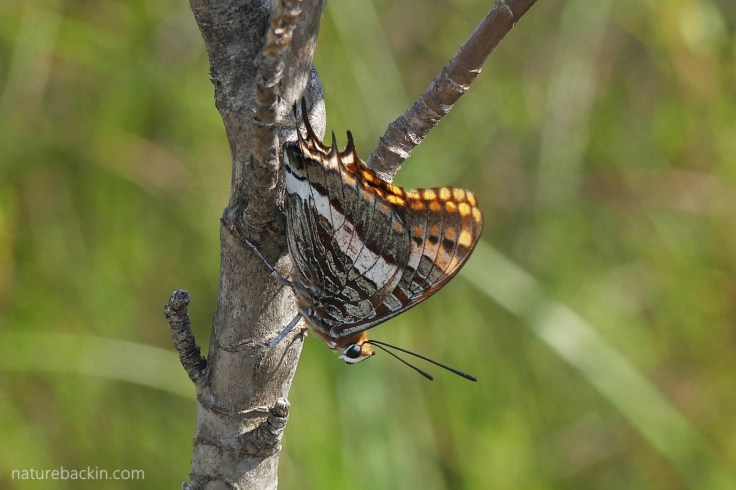
Hanging onto a plant stem for dear life in a gusting wind, we spotted a protea emperor butterfly (Charaxes pelias).
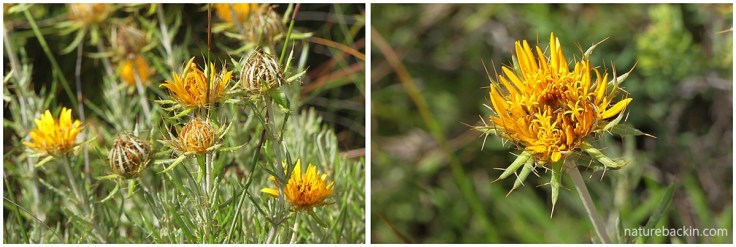
The ubiquitous needle-leaved Cape thistle (Berkheya angustifolia) is endemic to the Western and the Eastern Cape provinces in South Africa.
For more information on the Suikerbossie Mountain Cabin that we stayed at, see https://www.kritplaas.co.za/
Posted by Carol
Discover more from letting nature back in
Subscribe to get the latest posts sent to your email.


Leave a Reply