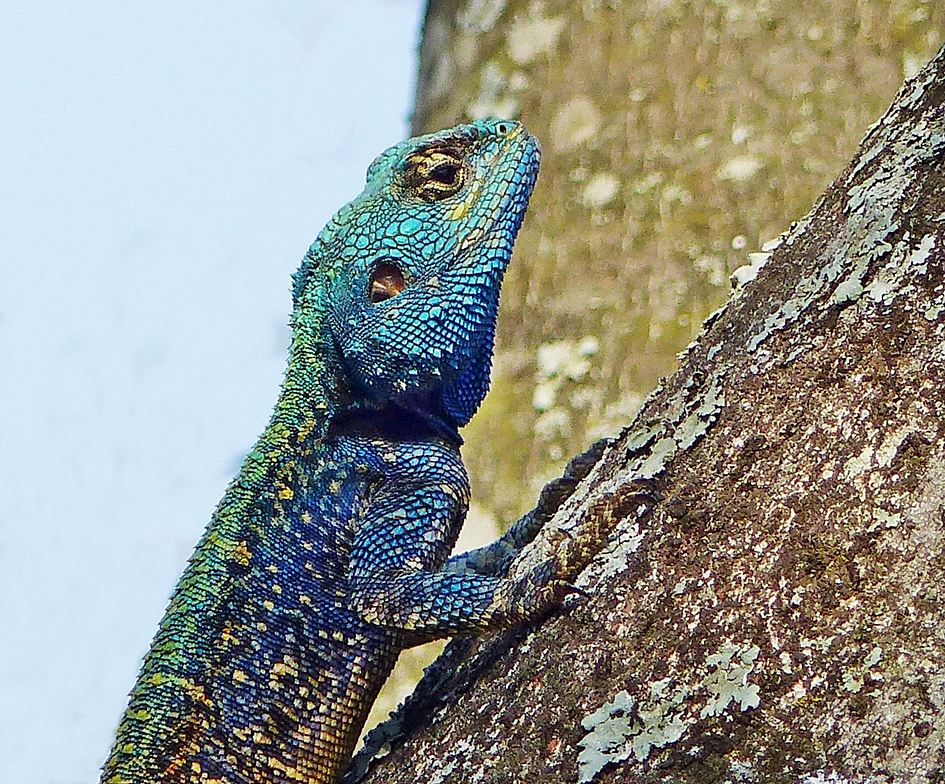
Southern Tree Agamas, commonly known as Blue-headed lizards, have adapted to suburban gardens, especially where there are suitable trees to sustain them. When breeding, the males are colourful and their vividly blue heads are most striking. Non-breeding males and females are considerably less conspicuous although their more understated scaly markings still render them handsome reptiles. Continue reading “Agamas in the garden”
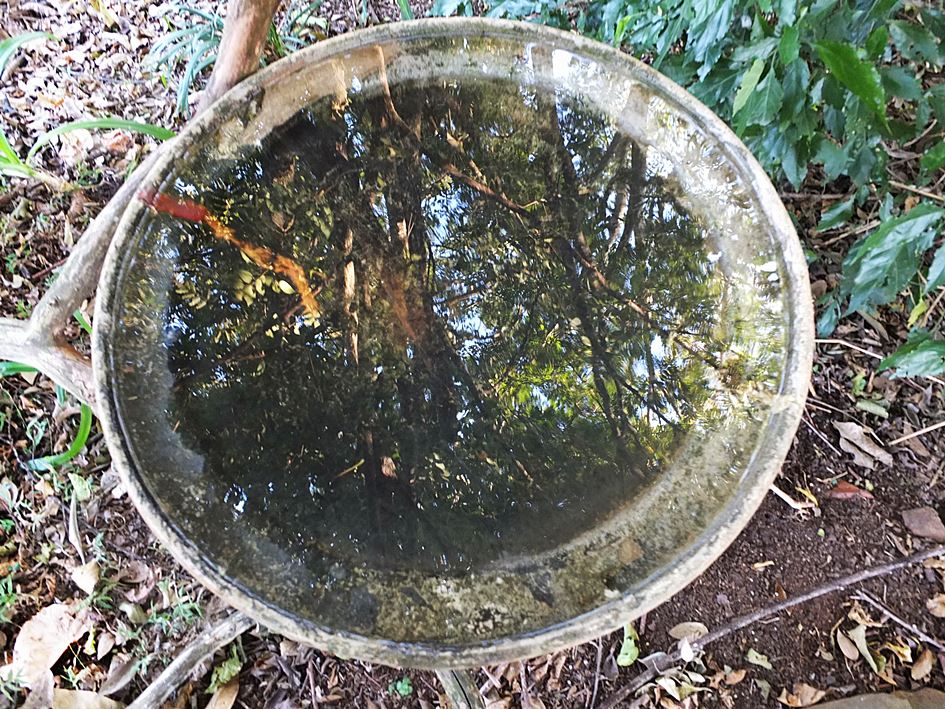
In a reflective moment, when the birds are absent, a bird bath frames a small circle of calm. ★
Posted by Carol at letting nature back in
Weekly Photo Challenge – Frame

Some may think I am being frivolous in attributing human characteristics (aka anthropomorphism) to birds by suggesting that when splashing about, dunking and dipping, birds at our bird baths are enjoying themselves and having fun. Perhaps I need to be reminded that for birds (and everyone else), drinking and regulating body temperature are essential to survival, and it goes without saying that surviving is not about fun. And also, keeping feathers well-groomed improves a bird’s ability to fly, also essential to bird survival. Continue reading “Birds just wanna have fun: Birds bathing, drinking and splashing about”

Also known as the Forest Bell Bush and as River Bells, the Mackaya bella is a popular shrubby plant, not only because of its beautiful flowers, but also because it grows well in shade or semi-shade. It is easy to propagate from cuttings and it also self-seeds, so if you have one, look out for baby seedlings to transplant. It is endemic to southern Africa and its wood has been used to make fire by friction (Pooley, 1997). Continue reading “In the zone: Mackaya bella and its pollinators”
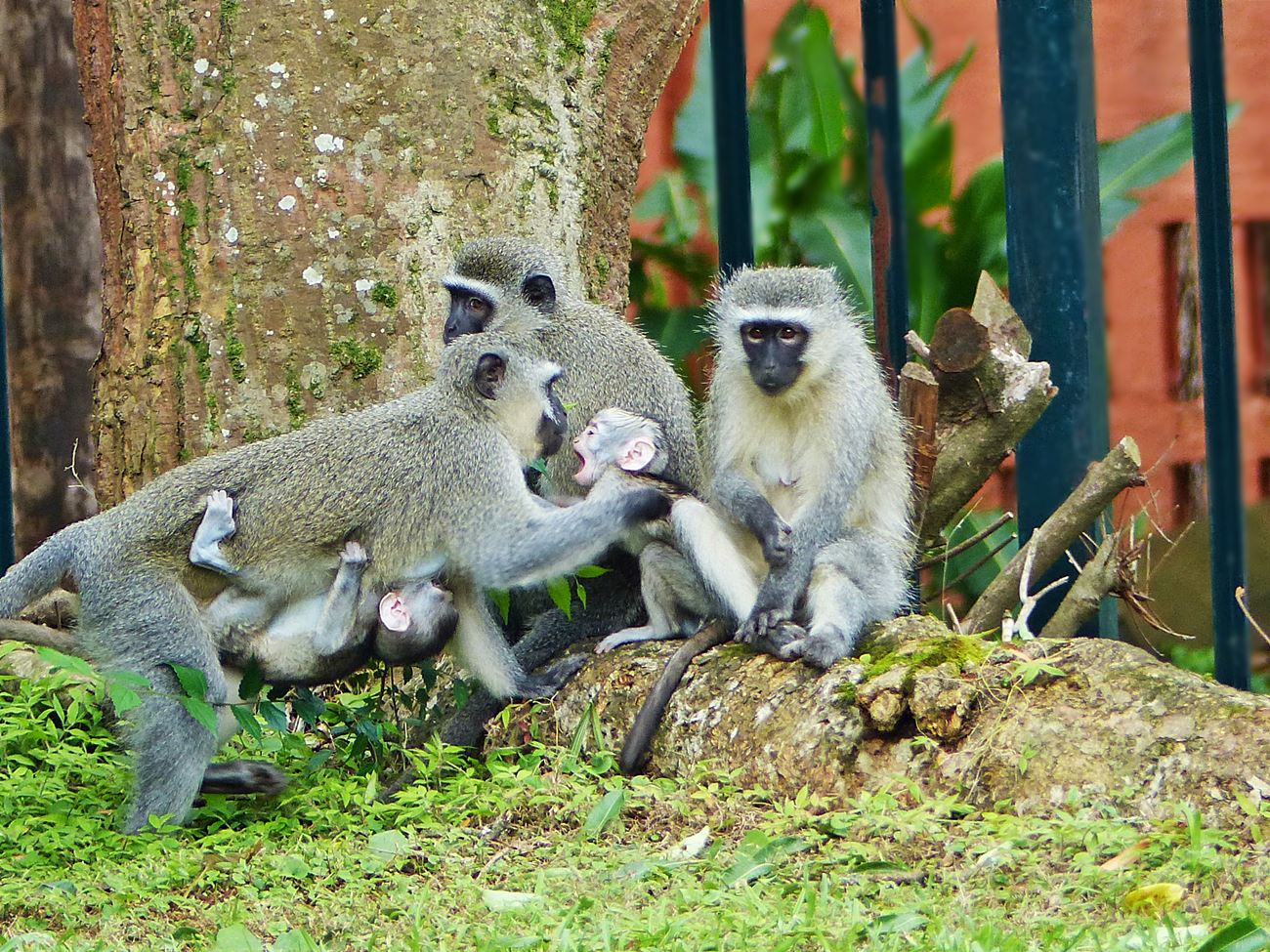
It is rare to capture an encounter like this in a suburban garden and so it seems appropriate for it to be included in the Rare: Weekly photo challenge. Although vervet monkeys are attracted to infants and often solicit permission from monkey mothers to touch or even hold their infants, I think this encounter is rare as the mother is approached by another mother who is already nursing her own baby. Also she takes the baby without permission. To find out what happens see the full photo essay in the previous post at letting nature back in ★
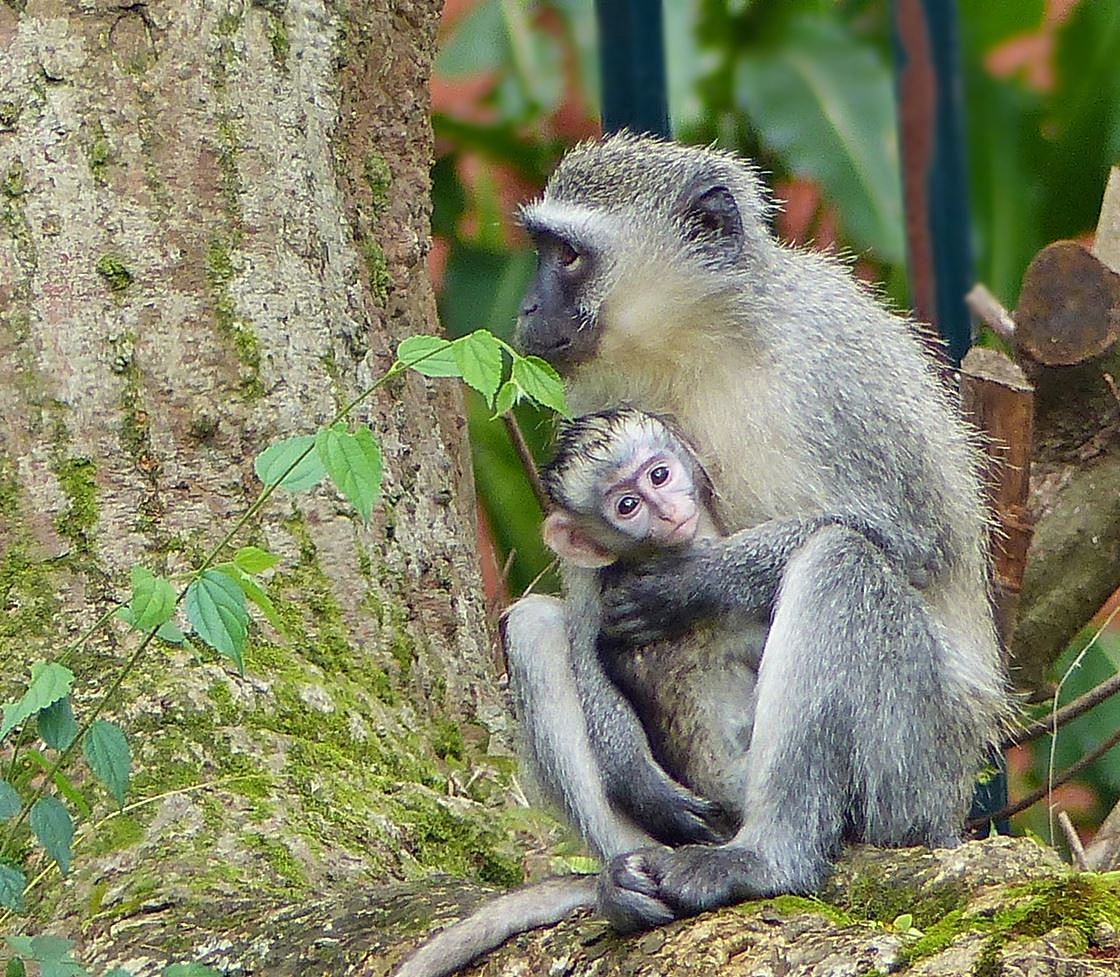
This post is in the form of a photo essay documenting what happened after a vervet monkey mother, nursing a baby of her own, suddenly took a smaller baby from another mother.
Although it is common for juvenile and female monkeys to take an interest in infant monkeys and to want to touch and even hold the infants, this is the only time I have seen a monkey with her own small baby take another baby and without permission. This may be unusual or rare behaviour, and it is rare to capture it on camera in a suburban garden. Continue reading “Monkey mom snatches a second baby: A photo essay on how the story unfolds in my suburban garden”
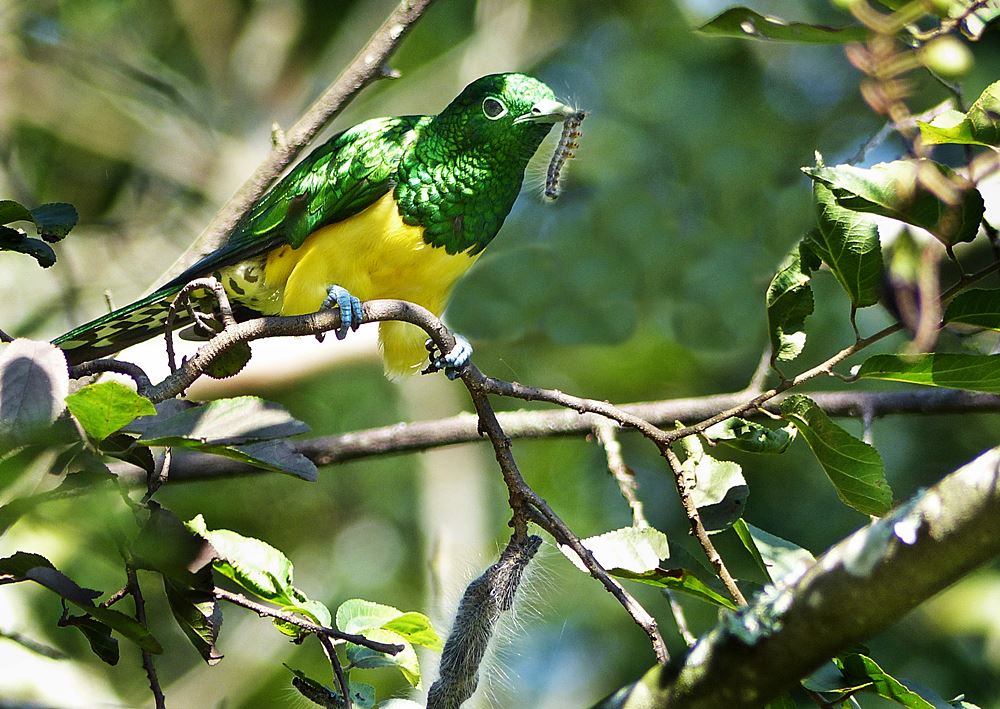
Perfect hosts are hard to find. Processionary caterpillars only accept hospitality from a handful of host plants. One of these is the Cross-berry, which the caterpillars return to each year, in our suburban garden. In turn, the perfect host also accommodates the predatory birds and insects that are attracted to the caterpillars, including the iridescent male African Emerald Cuckoo pictured above. Continue reading “The perfect host: Processionary caterpillars in our suburban garden: Part 2”
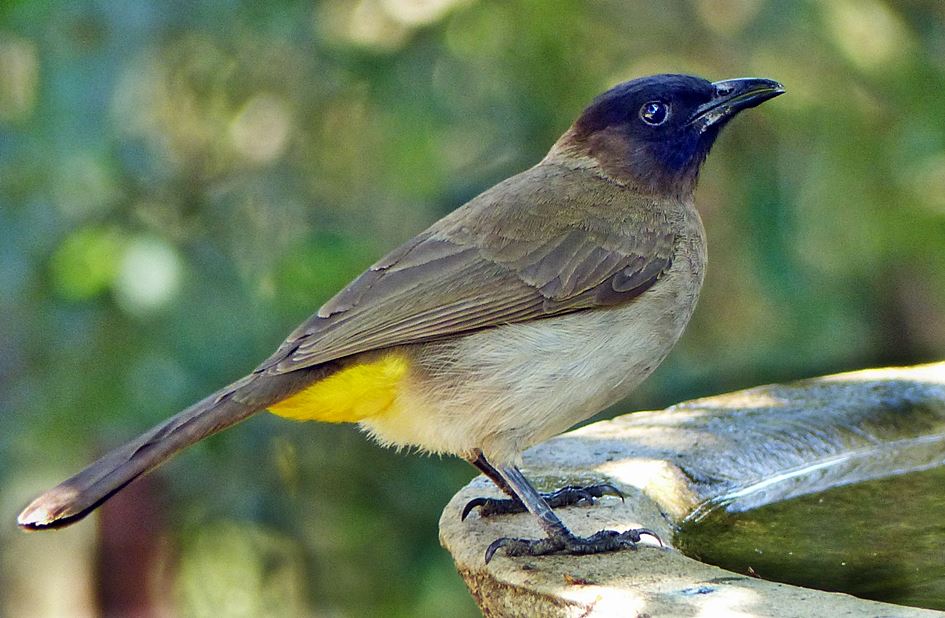
Birds that are common in suburban gardens bring life and liveliness that we sometimes take for granted. This is the first in a series of posts on favourite birds: familiarity breeds respect! Continue reading “Favourite garden birds to cherish: Dark-capped Bulbul (aka Toppie)”

The meaning of the word “seedy” has come to be associated with being unkempt or shabby, rather than being fruitful or abundant, which was the original meaning of the word, according to the Online Etymology Dictionary. We speak disparagingly of having “gone to seed”, and admiringly of being “in the flower of youth”. Perhaps this comes from the school of thinking that life is linear, rather than the tradition of thinking in terms cycles of life. Continue reading “Celebrating seediness”
