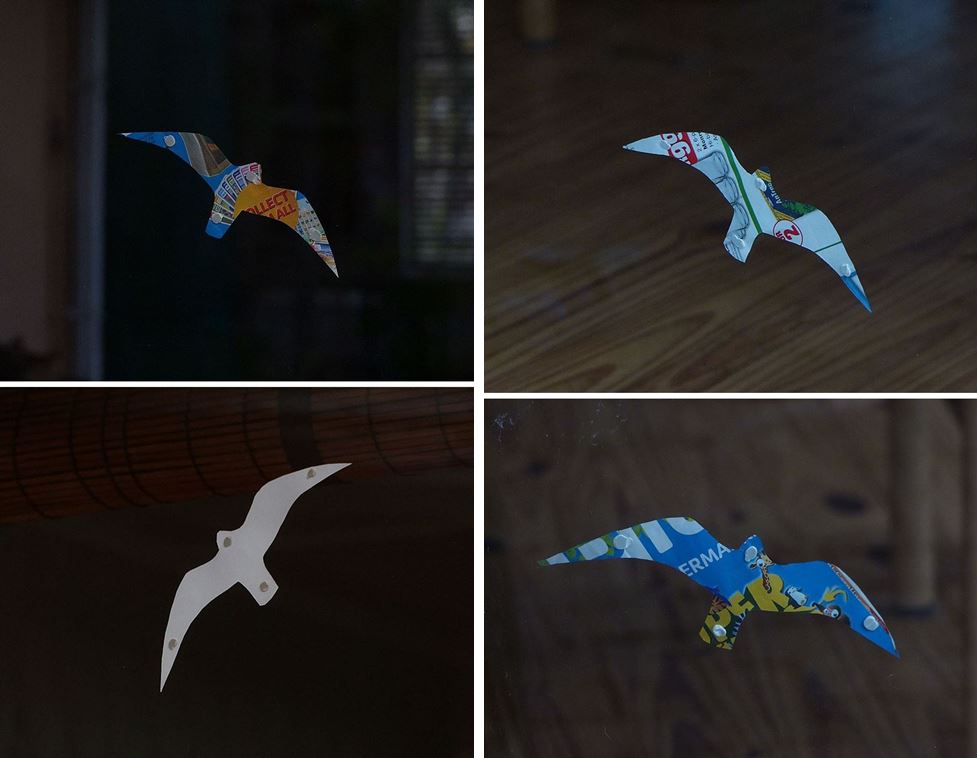
Many birds die or are seriously injured when they inadvertently fly into window panes. Reflections of sky and landscape on the glass or else seeing through a window to plants or light on the side can mislead them. Big plate glass windows are the worst for flying birds because of their large seamless reflections. Continue reading “Making your windows more visible to flying birds”
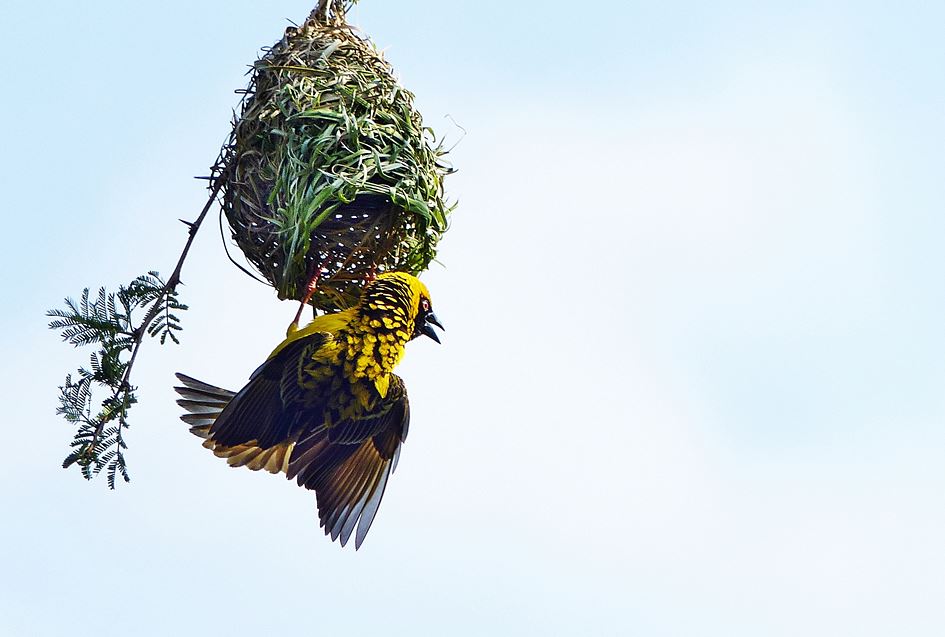
He built this nest in anticipation of attracting a mate. Continue reading “Anticipating attracting a mate”
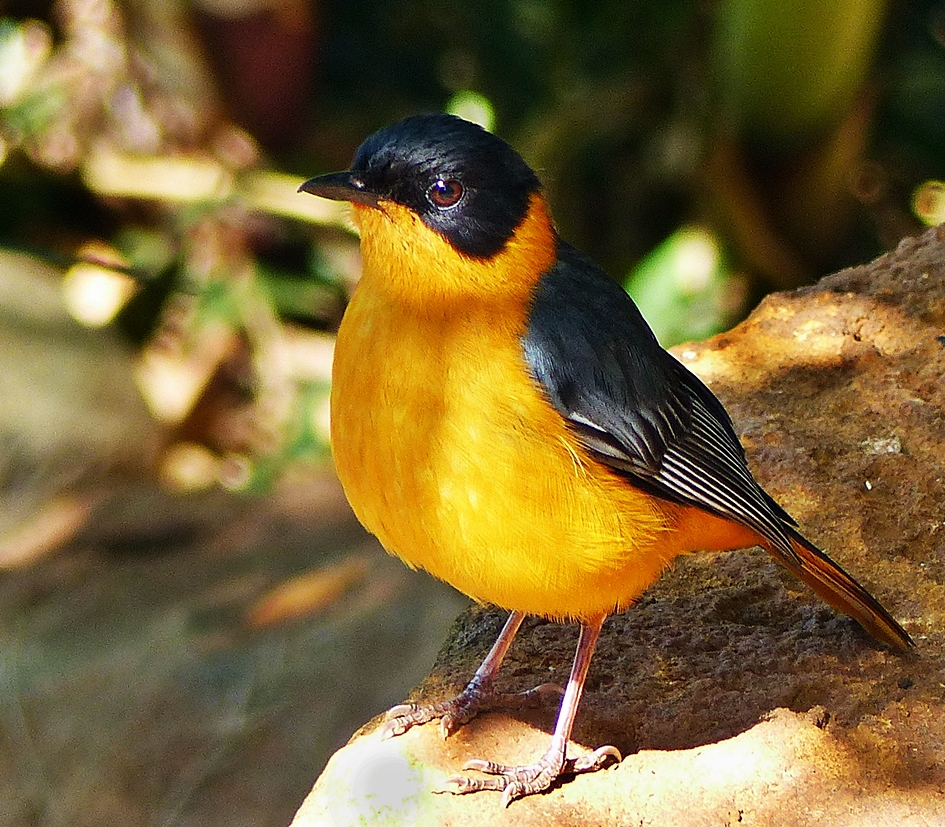
Even in sunny South Africa, European winter traditions are evident at Christmas time. There are Christmas cards that feature red-breasted European robins and there was a time when shop windows sported cotton-wool snow and plastic holly, even though December is at the height of the southern hemisphere summer! Continue reading “Christmas cards and robins”

The Southern Boubou is most noticeable on account of its ringing duetting call. It is an audible presence in our garden, and we catch glimpses of the pair hopping through low dense foliage, but they are shy and it is difficult to get a clear view of them. These photos were taken on a recent road trip to the Western Cape and back. Cheating perhaps? Continue reading “Southern Boubou: A bushshrike that’s usually quite shy”

What catches the eye is not so much the bright red collar as the iridescent green sheen of this Southern Double-collared Sunbird. Continue reading “Sunbird shine”

I grew up with raucous calling of the Hadeda Ibis. When at dusk they call in unison as they fly back to their roosts, when at dawn they call seemingly to advertise their presence to their neighbours, and even the frequent callouts during the day to keep in touch with family members or to warn of dangers from predators; I love the sound.
Continue reading “Suburban soundtrack: Call of the Hadeda Ibis”

Not all Kingfishers catch fish, as can be seen in this photo of a Brownhooded Kingfisher. Rather than a fish, he has just caught a cricket. This Kingfisher hunts by sitting on a low perch, in this case our garden fence, watching the ground for potential prey. Continue reading “Brownhooded Kingfisher: The art of hunting by sitting still”

The name “Laughing Dove” derives from its bubbling call that is said to have a gentle laughing quality. Laughing Doves are thought to be monogamous, with birds pairing for life. Continue reading “Favourite Garden Birds: Laughing Doves”

Not all cuckoos are brood parasites, but the cuckoos in our area all lay eggs in the nests of other birds and leave the hosts to raise the young. The female cuckoo surreptitiously approaches a host nest and rapidly lays a single egg and also removes another egg from the nest. She will lay 4 to 5 eggs on successive or alternate days in different nests, and most will lay about 20 eggs in total over one breeding season. Continue reading “The cuckoo has landed”
