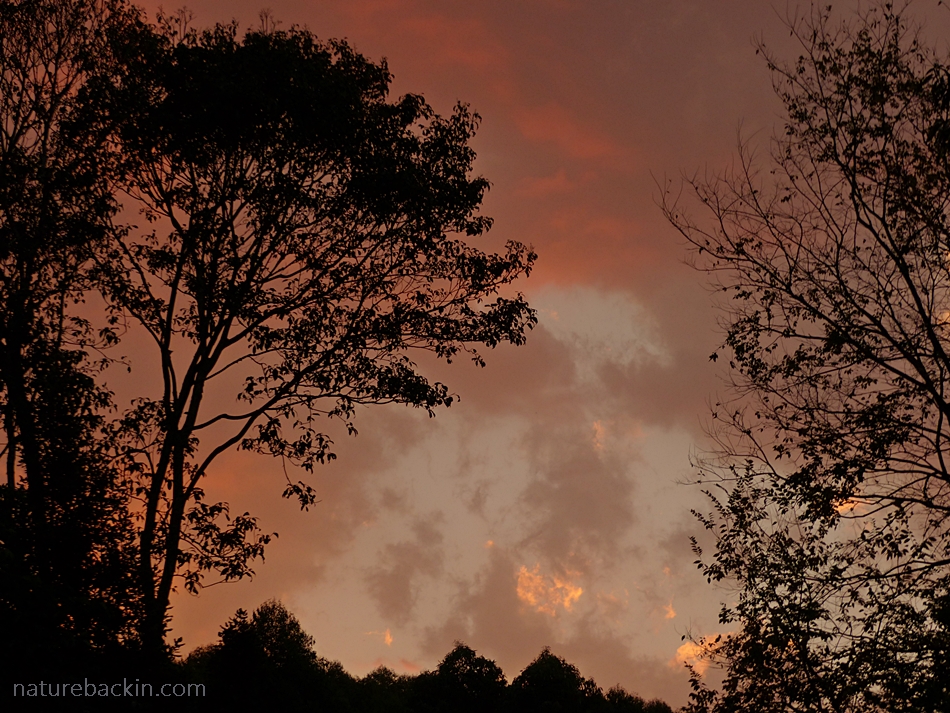
Back in the suburbs after our travels, we still have the transcendent sky. Paradoxically, as it arches above us, out of reach and sublime, it also reconnects us to Earth. Continue reading “Transcendent suburban skies”
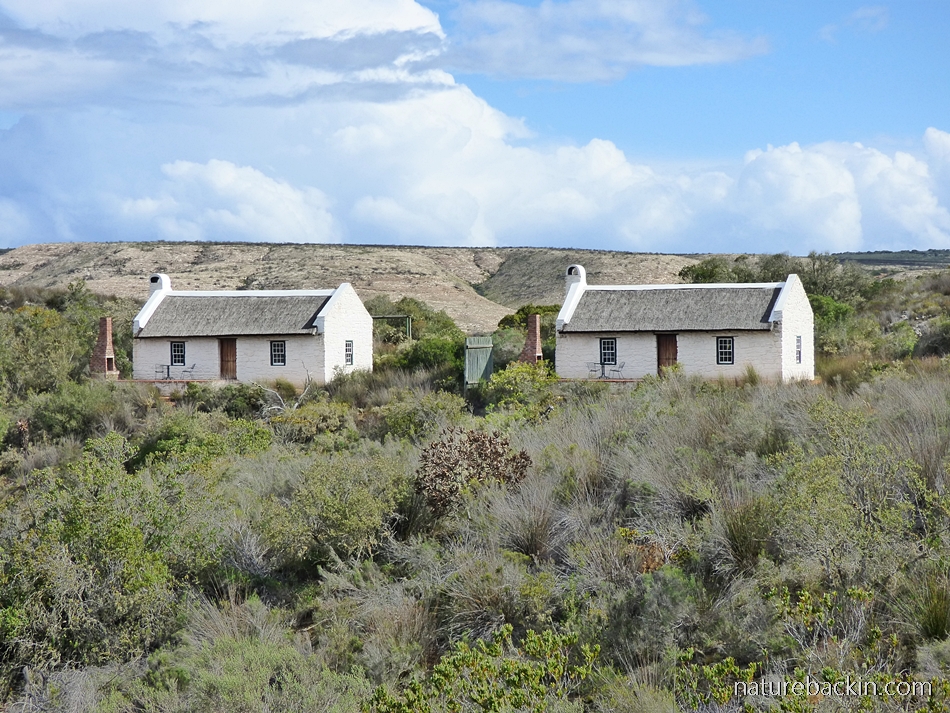
At Wild Rescue Wildlife Sanctuary and Nature Reserve, we had the pleasure of staying in a beautiful stone-walled thatched cottage built in the Cape style. We had the opportunity to walk along narrow trails through intriguing vegetation in the reserve, which is classified as a Critical Biodiversity Area. Because of its variety of contrasting soil types, all the major plant communities of the Agulhas coastal plain can be found in close proximity in the 165-hectare nature reserve. Continue reading “Wild Rescue Nature Reserve: Step out in a peaceful floral kingdom of wonders”

The coastal path at the settlement of Onrus meanders through fynbos vegetation above the rocky shoreline. On our recent visit we enjoyed the sea air, wonderful views of the kelp-laced ocean swells and breakers, and walking among the diversity of plants and birdlife. Continue reading “Following the coastal path at Onrus”
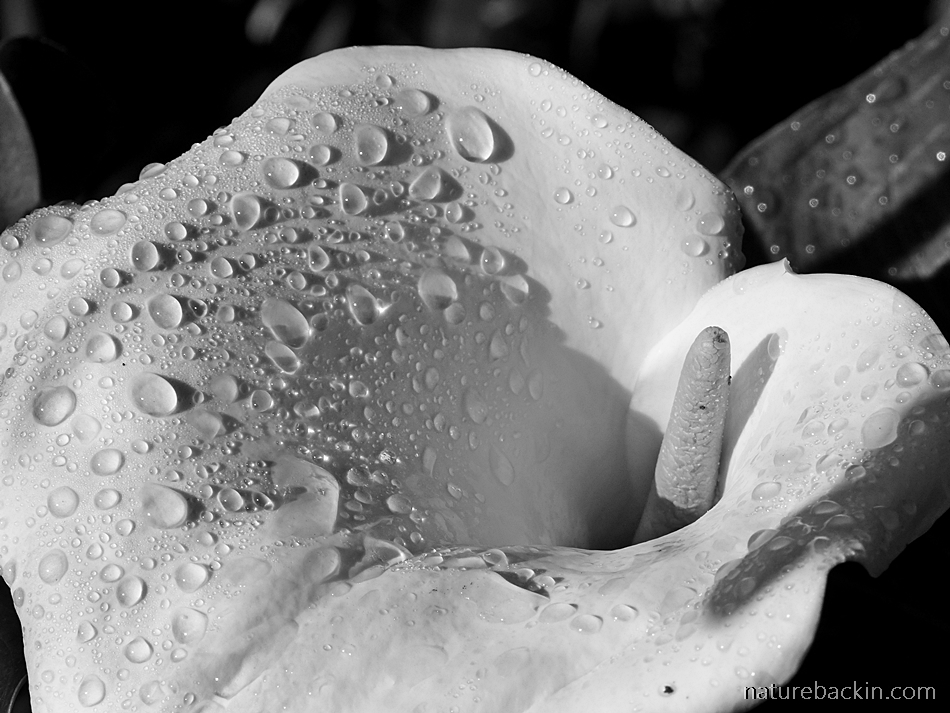
Curves, rounds and circles are numerous in nature and are reflected in these photos taken in our garden over a period of time. The monochrome serves to emphasise the geometry of the shapes. Continue reading “Well rounded: Monochrome curves in the garden”

A process of discovery is available to us if we learn to see what we usually overlook. But what we discover depends more on our own personal filters than on what we think we are looking at. Continue reading “Surprises and encouragements: Learning to see”
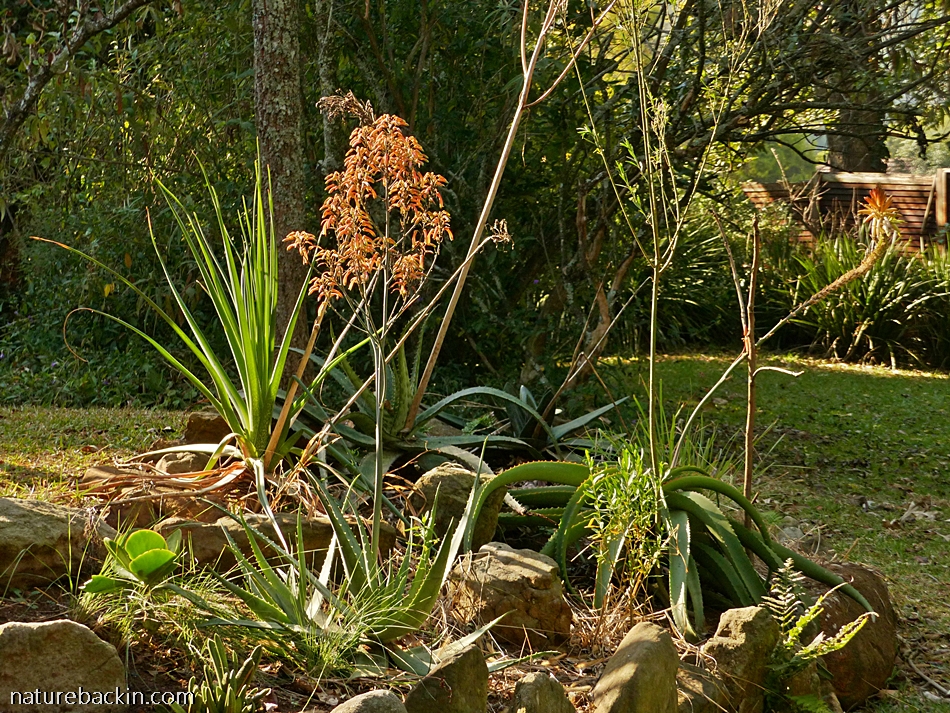
We planted a small patch of aloes in the garden a few years ago. We have enjoyed watching them grow and go on to flower and provide nectar for insects and birds. We have encouraged wild grasses and allowed other self-seeded plants to grow up around them. Continue reading “An aloe patch in the garden”

Yes that’s right, a hot winter’s day. Yesterday’s high temperature of 28°C intensified the season’s dryness as we found when we ventured forth from suburbia for a walk in the Drakensberg mountains. Continue reading “Mountain walking on a hot winter’s day”

I first fell in love with a Tassel Berry tree at the Hluhluwe Game Reserve Hilltop Camp. It was old, gnarled and shaped by the prevailing wind. By contrast, the tree in our garden leads a sheltered life. Continue reading “The Tassel Berry tree: Bountiful in fruit and flower”
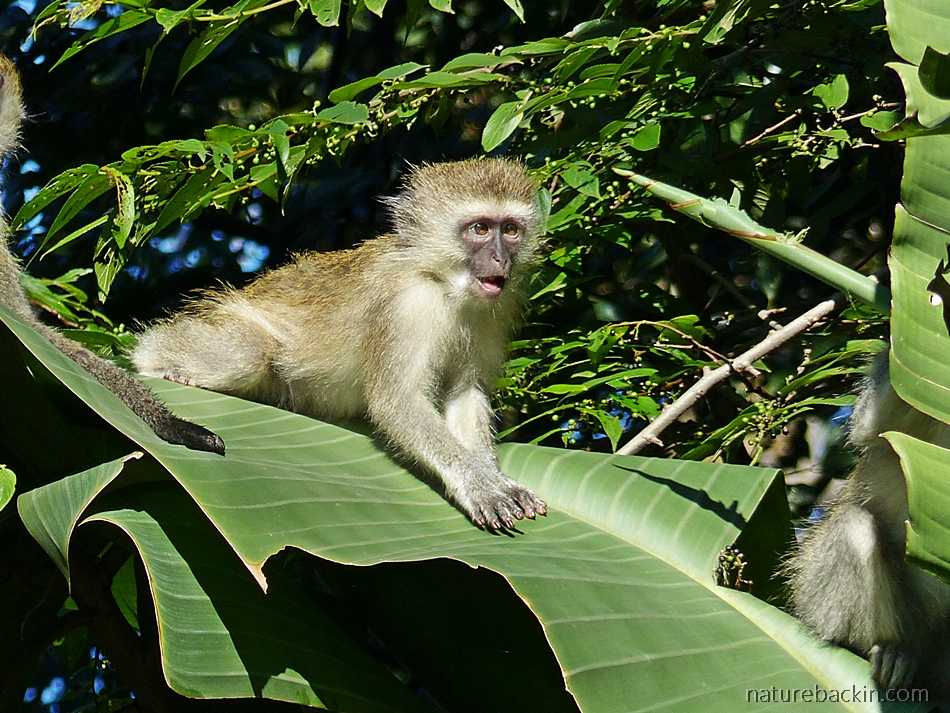
This young Vervet monkey is part of a group enjoying early morning winter sunshine while eating berries from the Pigeonwood (Trema orientalis) tree. I like how the youngster is taking advantage of a wild banana (Strelizia nicolai) leaf as a partial hammock. Continue reading “Winter in the garden: a selection of photos”
