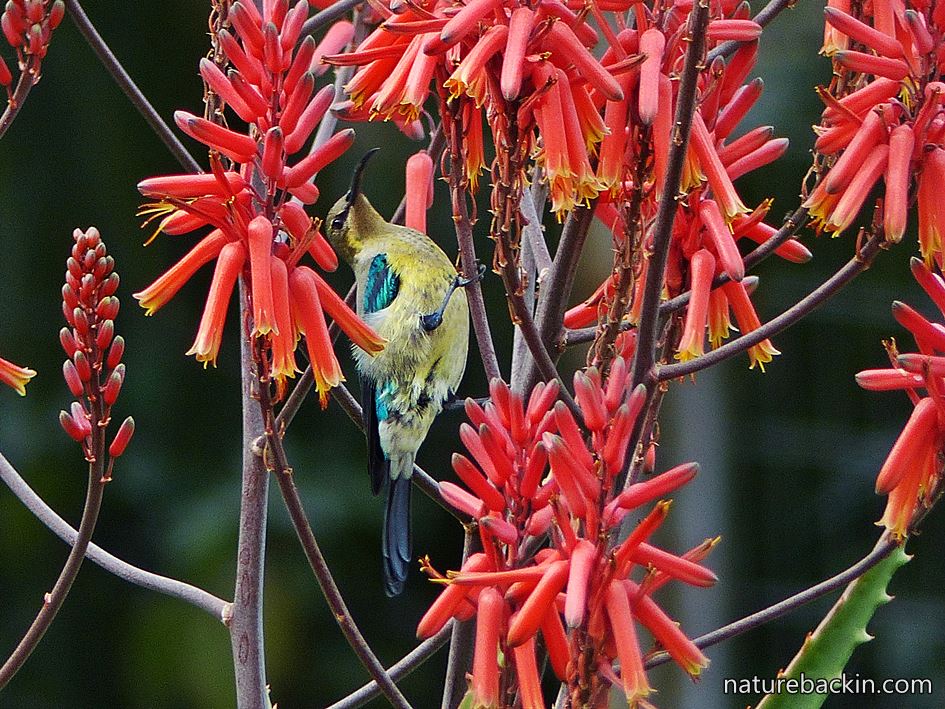
Flowering aloes attract many birds and insects, and in the case of the Ashburton Aloe Festival, many visitors too are attracted to this annual event held by the Lower Mpushini Valley Conservancy. Continue reading “Aloes and gardens, Samangos and forests”
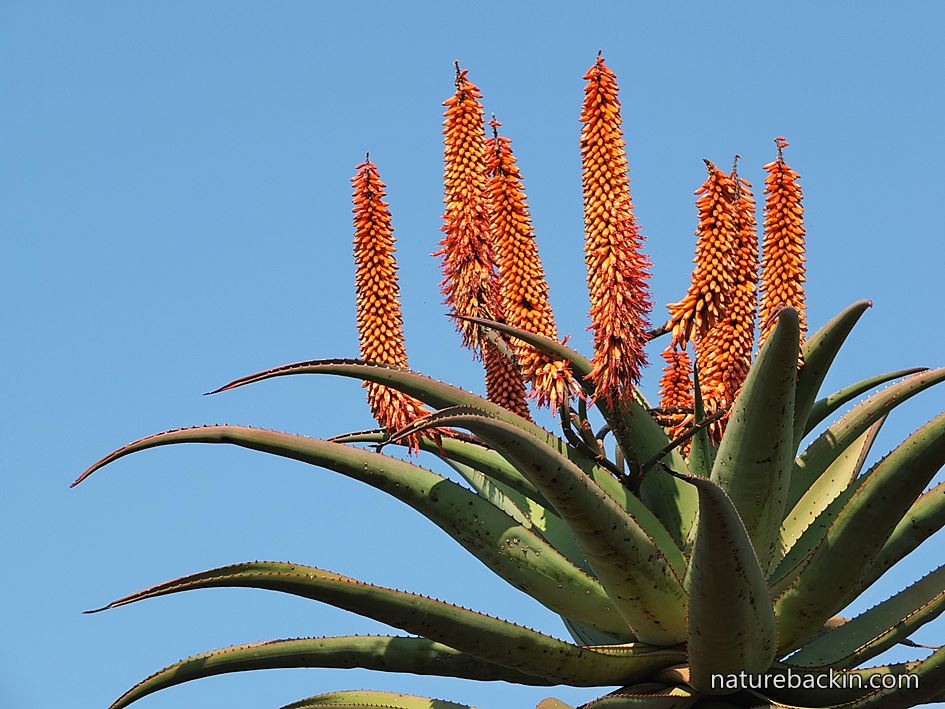
This is my first post from outside our garden. We ventured forth to the annual Ashburton Aloe Festival that takes place in a nature conservancy on the other side of town. Continue reading “Aloe from the other side”
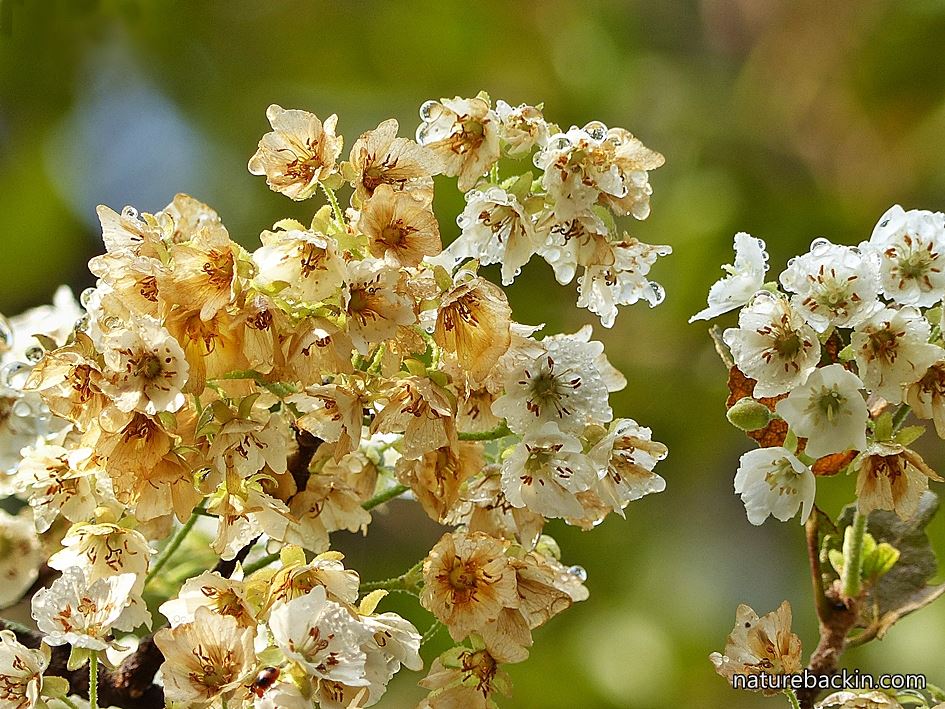
Change is often associated with something unwelcome or even threatening, but the change of seasons that cycle through time is an ongoing process that we and the natural world rely on. Continue reading “Transitions we rely on”
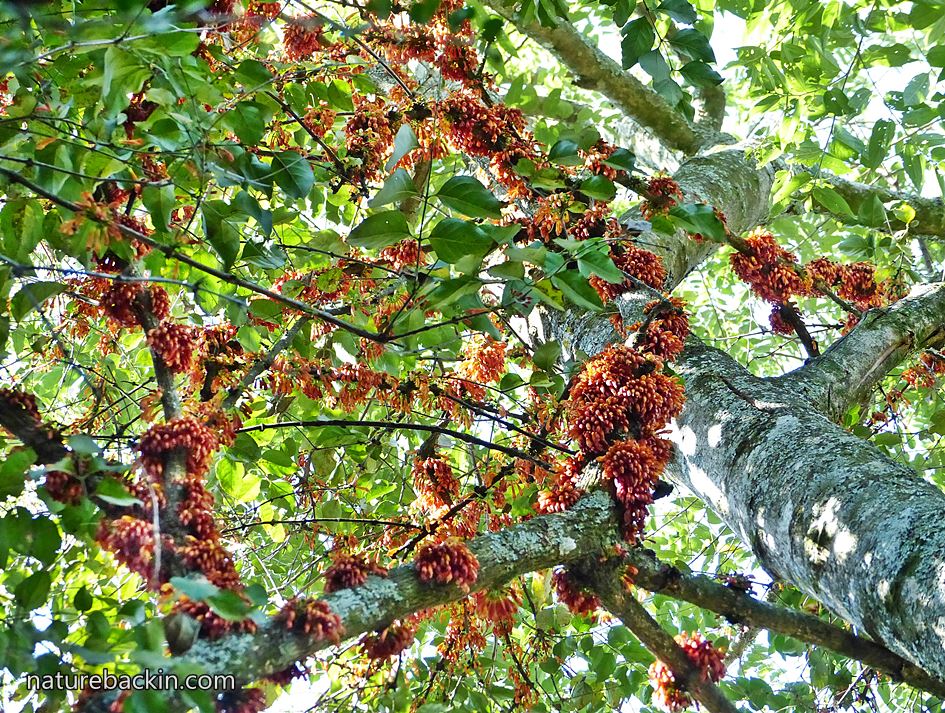
Known as the Tree fuchsia, because of the shape and colour of its flowers, this plant is adaptable, and can be a multi-stemmed shrub or a huge evergreen tree, depending on its growing conditions. Continue reading “A fuchsia to depend on: A feast for the eyes and the birds”

Once upon a time, not long ago and not far away, a White Starred Robin visited our garden pond. If I had the powers to understand the language of robins, what might I learn? Continue reading “The understorey: The tale of the White Starred Robin”
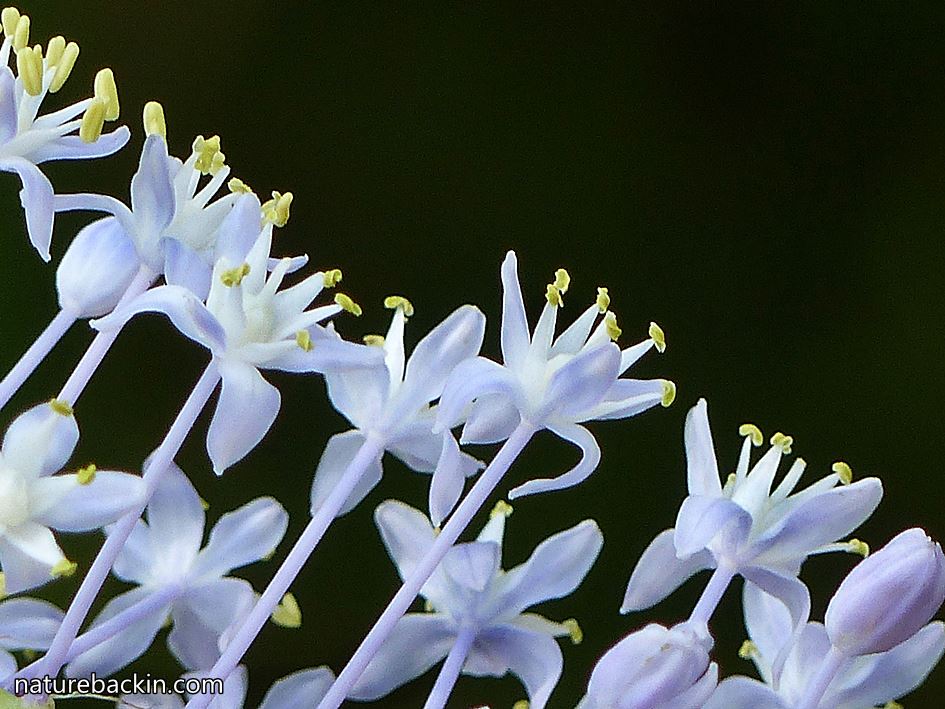
The tiny flowers neatly arranged on pale blue stalks combine to form long plumes of delicate blue. Continue reading “Precision”
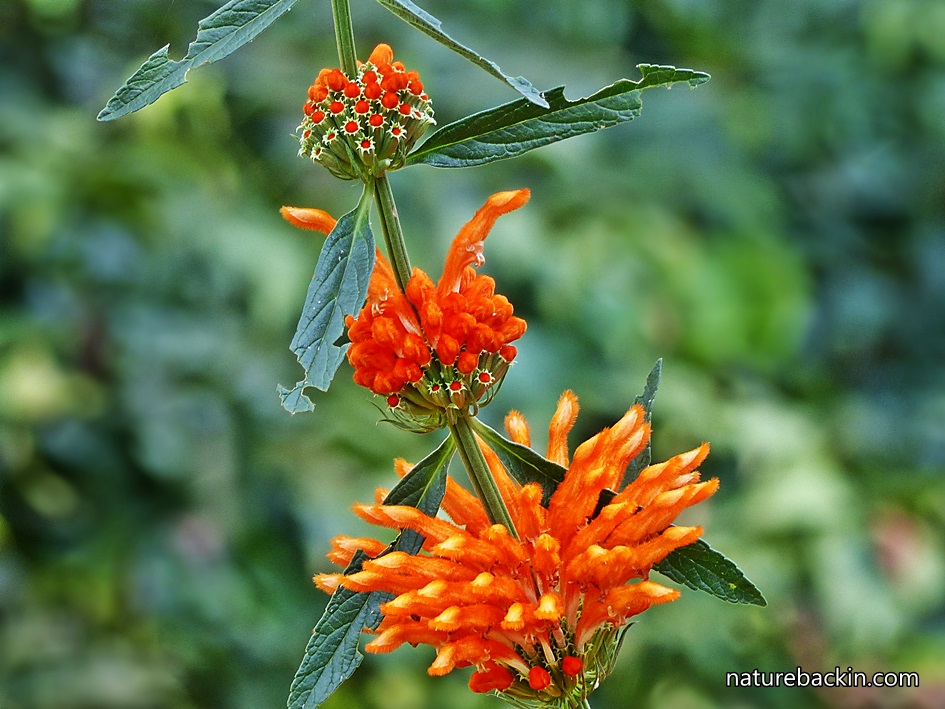
Bringing good cheer and nectar in the late autumn and early winter, the Wild Dagga’s bright orange flower clusters, arranged vertically on segmented tall stems, brighten wild grasslands and gardens alike. Continue reading “Wild Dagga: Cheerfulness in early winter”
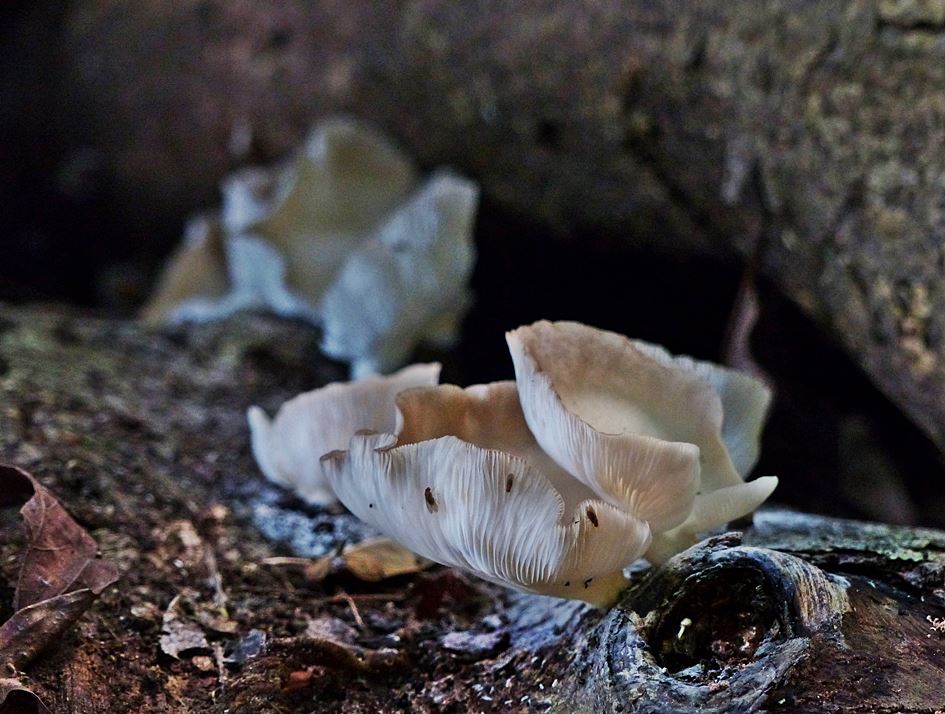
These delicate fungi appear suddenly, when the temperature and humidity are just right. Continue reading “Ephemeral fungi”

The African dog rose takes its name from a wild briar rose that is native to regions in Europe, western Asia and northwest Africa. Despite the shared common name, they are not related; what they have in common is a superficial resemblance between their flowers. Continue reading “The African dog rose”
