This week in the aftermath of the widespread looting and destruction across much of KwaZulu-Natal and parts of Gauteng I have few words. Although a semblance of calm might seem to prevail and road delivery routes are opening up, suffering and bereavement, sadness and pain, loss and fear, anger and resentment remain.
Continue reading “Wordless in the aftermath: KwaZulu-Natal July 2021”
We have a crisis in our land. Reports of an orchestrated insurrection seem increasingly credible. The political campaign ignited an explosion of destruction, and according to many analysts, it exploited and was partly fuelled by the misery and hopelessness of dire poverty and high unemployment levels that afflict a high percentage of people in our country (with youth unemployment being over 50%).
Continue reading “What may emerge from the ashes of destruction?”
One of the most beautiful fresh water pans in the northern Zululand region (Maputoland) of KwaZulu-Natal is the Inyamiti Pan in Ndumo Game Reserve. The pan is fringed by fever trees with their pale yellow bark reflecting in the water, especially in summer when the water level is high.
Continue reading “Journeying from freshwater pans to garden pond”
The freshwater biome can be categorized into lakes, streams and wetlands, and all are interconnected. We depend utterly on freshwater systems that globally comprise only 0.8% of all the water on the planet and cover only 1/5 of the Earth’s surface.
Continue reading “Going with the flow: Some southern African rivers and wetlands”
Aquatic biomes include both freshwater and marine biomes. The marine biome is divided into three main ecosystems: the oceans, coral reefs and estuaries. South Africa has a coastline that is over 3000 kilometres in length and it features coral reefs on its eastern coastline and numerous estuaries along its length.
Continue reading “Looking out to sea: The shoreline, the estuaries and the coral reefs”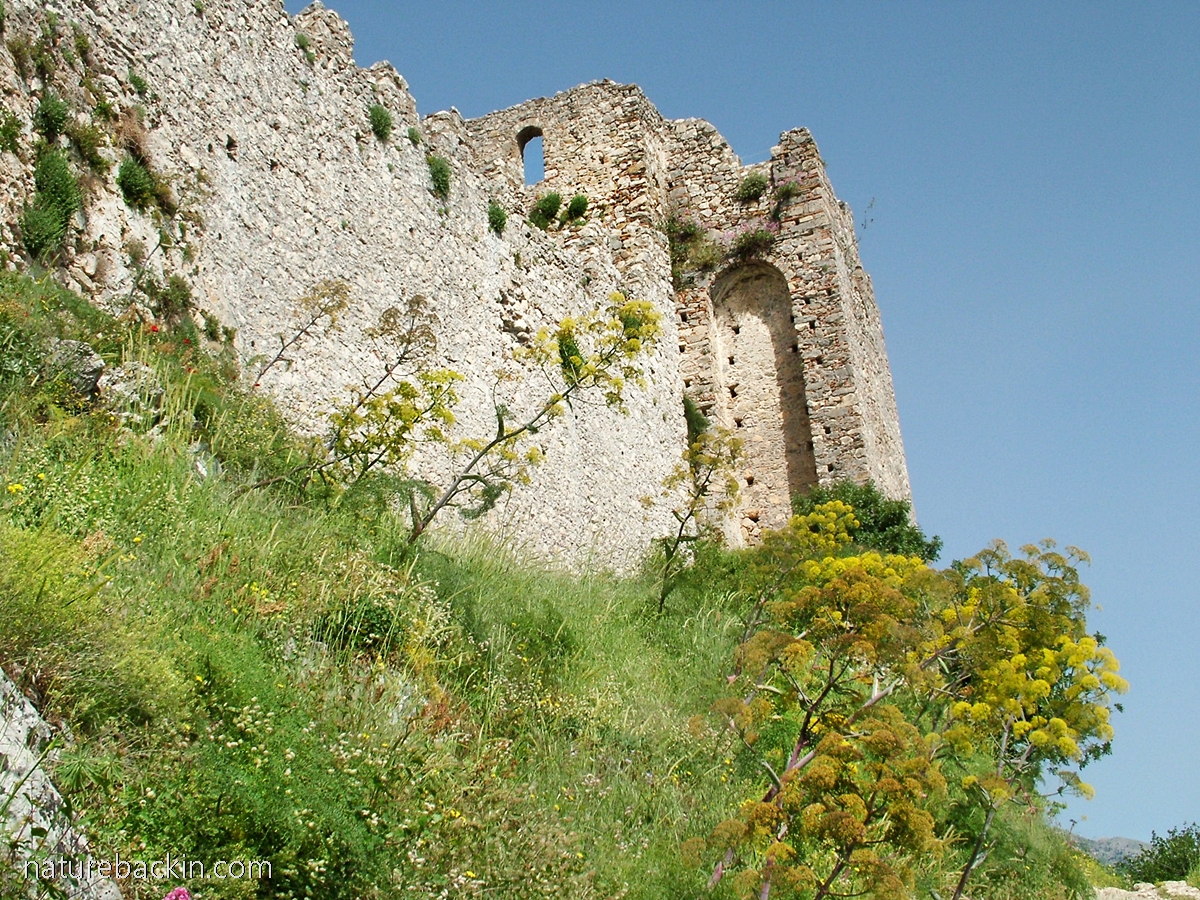
So why not something completely different? On a 2004 visit to Greece we found that nature is very much present inside, around and among not only ancient classical structures, but also Frankish, Byzantine and Venetian buildings and in contemporary urban and village contexts too. Nature and its bounty is honoured and represented in cultural practices and artefacts from antiquity to modern times.
Continue reading “Naturebackin went to Greece: Part 1 Sparti and Mystras”
There was a time when we wished for solitary Christmases when we had to take our holidays over Christmas and we chose to be away in remote places. But of course this year, a solitary Christmas is thrust upon us. Not having a choice is a different matter, and for many of us it is distressing or at the very least disappointing not to be with family and friends over the festive season.
Continue reading “Remembering another solitary Christmas: Botswana, December 1999”
By making your own soap at home, not only can you customise the soap that you use every day, but you also reduce packaging waste and eliminate the use of parabens, surfactants and other undesirable chemicals.
Continue reading “Making cold process soap at home”
The holiday association of shrubby Ouhout trees lining mountain streams and hiking trails meant that we were delighted to find an established Ouhout growing in the garden when we moved into our current home some years ago. The Afrikaans name, used also by English speakers, ‘Ouhout’ literally means ‘old wood’, and even young plants have a woody gnarled appearance.
Continue reading “Ouhout: An adaptable and tenacious survivor”