
Butterflies are widely appreciated for their beauty and their fleetness on the wing, as much as they are associated with transformation, hope, joy and love. Continue reading “Butterflies – Reasons to be cheerful”
The main seasons in our part of the world are only two: wet season and dry season. But prolonged drought over much of the country has erased that distinction into one long dry bleakness where rain of any significance is a memory or a hope. Continue reading “A dry season: Just add water”

Yes that’s right, a hot winter’s day. Yesterday’s high temperature of 28°C intensified the season’s dryness as we found when we ventured forth from suburbia for a walk in the Drakensberg mountains. Continue reading “Mountain walking on a hot winter’s day”

I first fell in love with a Tassel Berry tree at the Hluhluwe Game Reserve Hilltop Camp. It was old, gnarled and shaped by the prevailing wind. By contrast, the tree in our garden leads a sheltered life. Continue reading “The Tassel Berry tree: Bountiful in fruit and flower”
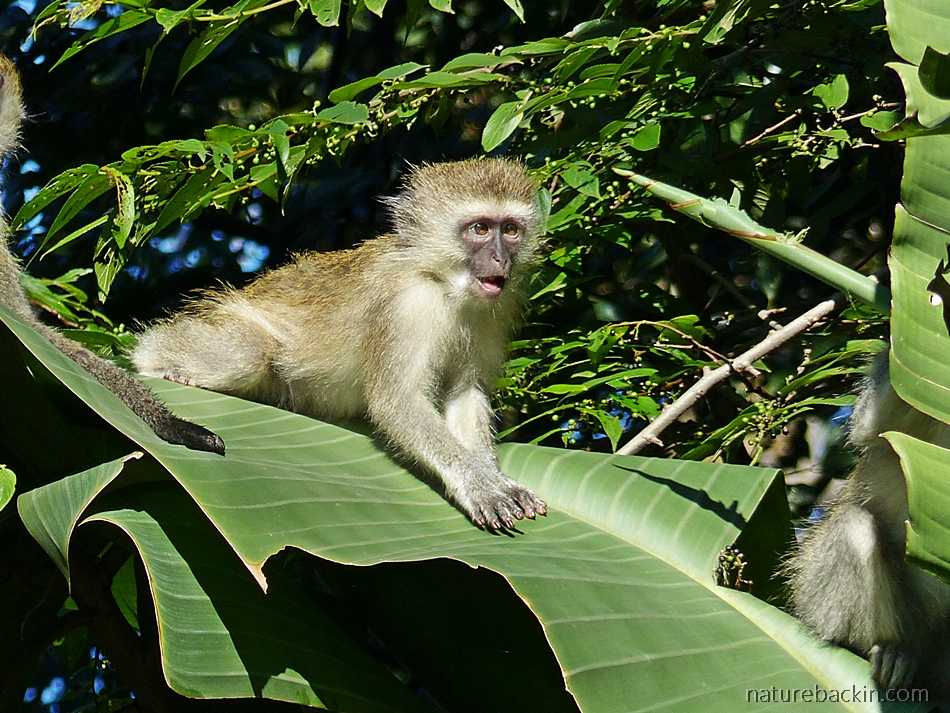
This young Vervet monkey is part of a group enjoying early morning winter sunshine while eating berries from the Pigeonwood (Trema orientalis) tree. I like how the youngster is taking advantage of a wild banana (Strelizia nicolai) leaf as a partial hammock. Continue reading “Winter in the garden: a selection of photos”
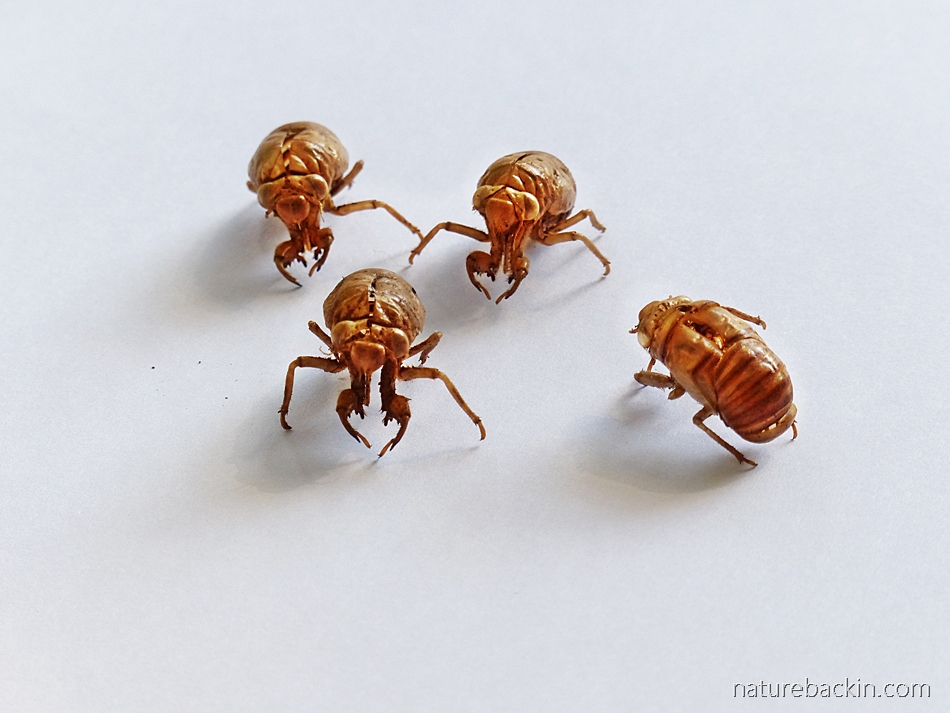
Cicadas are best known by the loud high-pitched sound adult male cicadas make mostly during the months of summer. Even though they are loud they are hard to locate and so well camouflaged they are difficult to spot, and typically we only see cicadas that have accidentally bumbled indoors. But sometimes we may come across exoskeletons left behind by cicada nymphs at the time of their last moult into their winged adult form. Continue reading “Skeletons in the garden Pt 1: Terracotta cicadas”
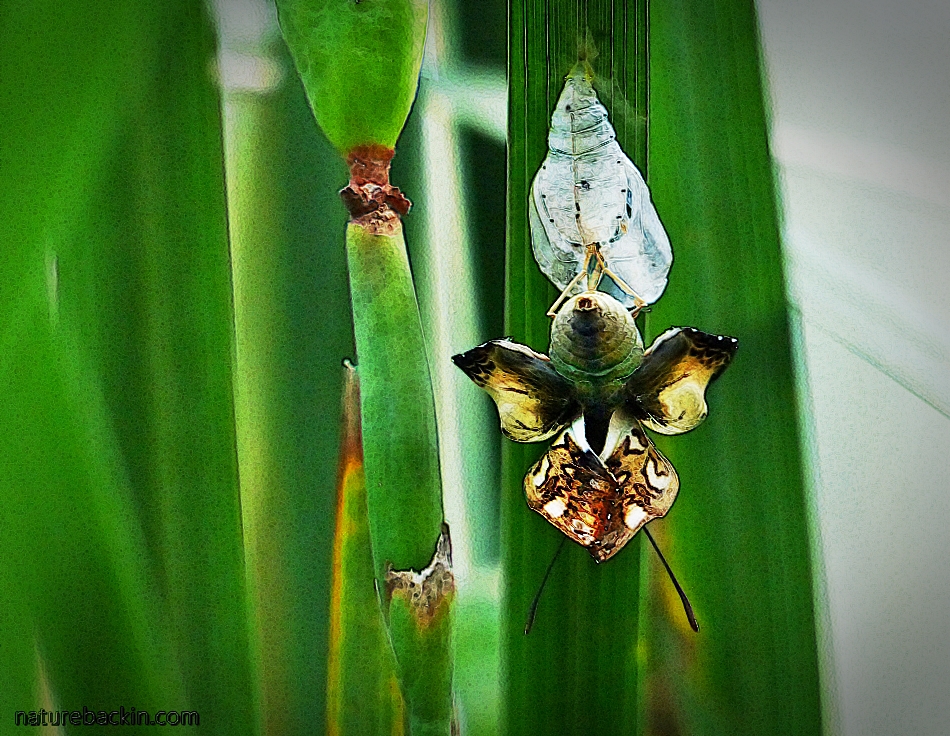
To see a butterfly emerging from the pupa to uncurl and spread its wings is akin to watching a miracle. Following on from last week’s post, here is my record of what might be a once-in-a-lifetime experience: witnessing individual butterflies emerge from the pupa (chrysalis). Continue reading “Watching butterflies emerging and getting ready to fly”
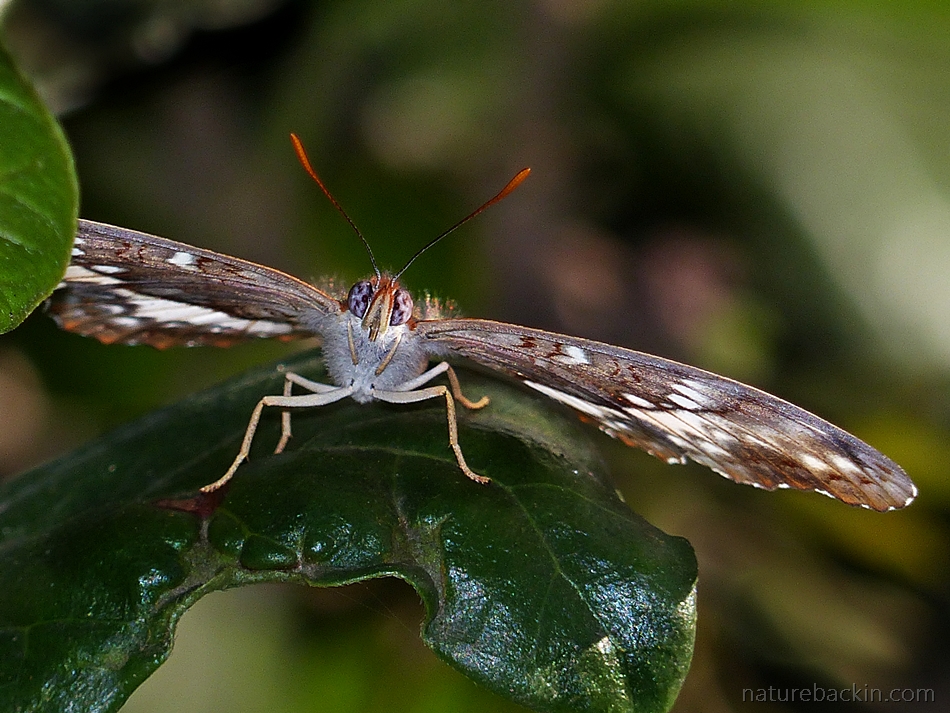
Very busy caterpillars that were doing more walking than eating in a nearly bare tree at the bottom of the garden first attracted my attention. My guess was that the caterpillars were getting ready to pupate, and so over the next few days I kept a look out hoping to find some pupae. It turned out that many of the caterpillars had been successful: I found dozens of butterfly pupae attached to leaves in nearby plants, and a few days after that, perching in the surrounding vegetation there were several butterflies with wings outstretched in the morning sunshine, these butterflies evidently from the first caterpillars to pupate. Inspecting the pupae, I found that several had hatched and some had newly emerged butterflies clinging onto the now empty shells. But as many of the pupae were still intact I couldn’t help thinking: If I keep careful watch I might actually witness a butterfly being born. Continue reading “Caterpillars with wings: An eye witness account of Battling Glider butterflies after hatching”

Damselflies hunt on the wing. They are not as acrobatic in flight as dragonflies, and I have seen them in flight manoeuvring slowly, rather like emaciated air balloons, floating horizontally searching for prey in the garden. Continue reading “Damselflies: Fleet flyer, aquatic egg layer”
