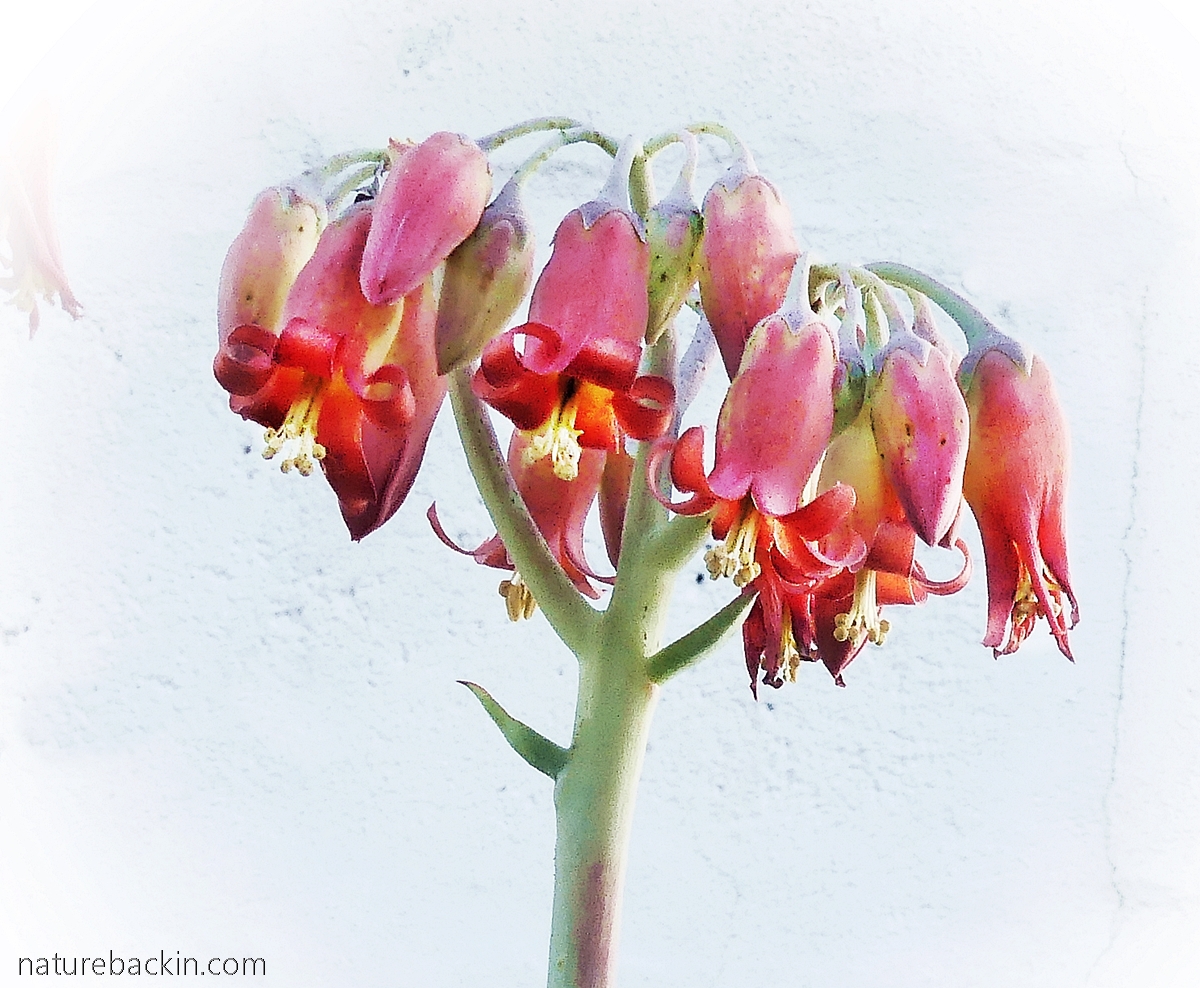
I was worried about moving from a wet summer/dry winter region to the Mediterranean climate of the Western Cape and learning to adapt to its wet winters. But here we are and experiencing what neighbours tell us is the worst Cape winter for years.
And they are right. It was reported in a recent newspaper article that the rainfall in the Western Cape so far this year is the highest for 47 years. The exceptional rain has brought flooding and hardship to many areas.

The rain sometimes arrives suddenly in sporadic squalls, but at other times it sets in quite steadily often accompanied by buffeting winds

Much of the garden has been waterlogged and our lettuces may not recover from being frequently drowned
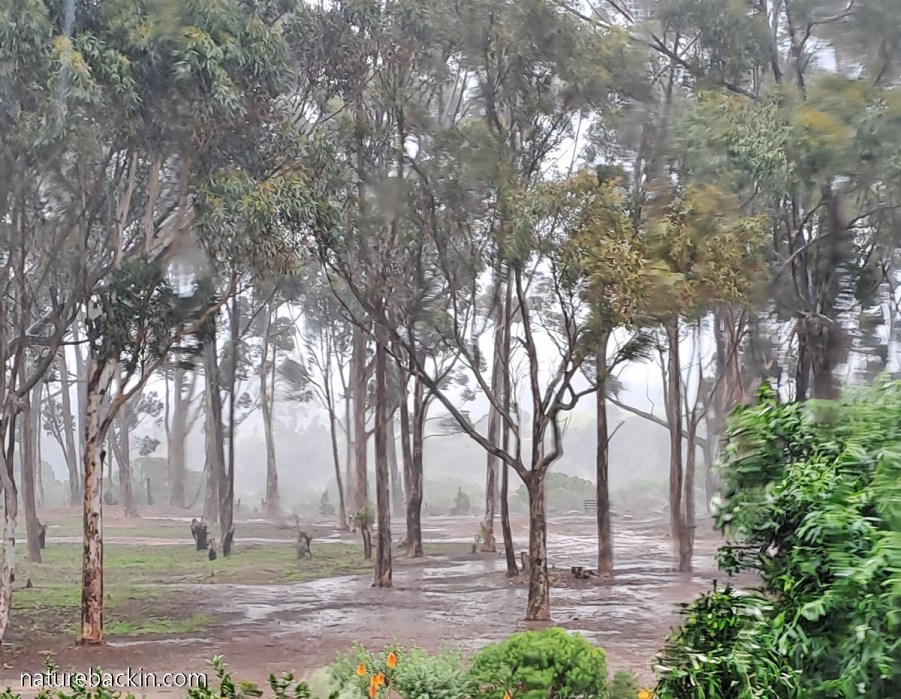
This photo does not really show the flailing leaves of trees and shrubs in the gusting wind, but the waterlogged ground beneath a stand of old eucalyptus trees at the edge of the village is plain to see
In the past few weeks we have had little sunshine, so the winter has not encouraged much exploring of our new neighbourhood. But last week we had two sunny days and I took the opportunity to photograph in our garden some flowers that seem impervious to the wind and the rain.
There are not many indigenous plants in the garden, but currently in flower are tall succulents known as pig’s ear (Cotyledon orbiculate). Popular as garden plants these succulents occur naturally across much of southern Africa, especially in rocky outcrops in grassland, fynbos and karoo regions.
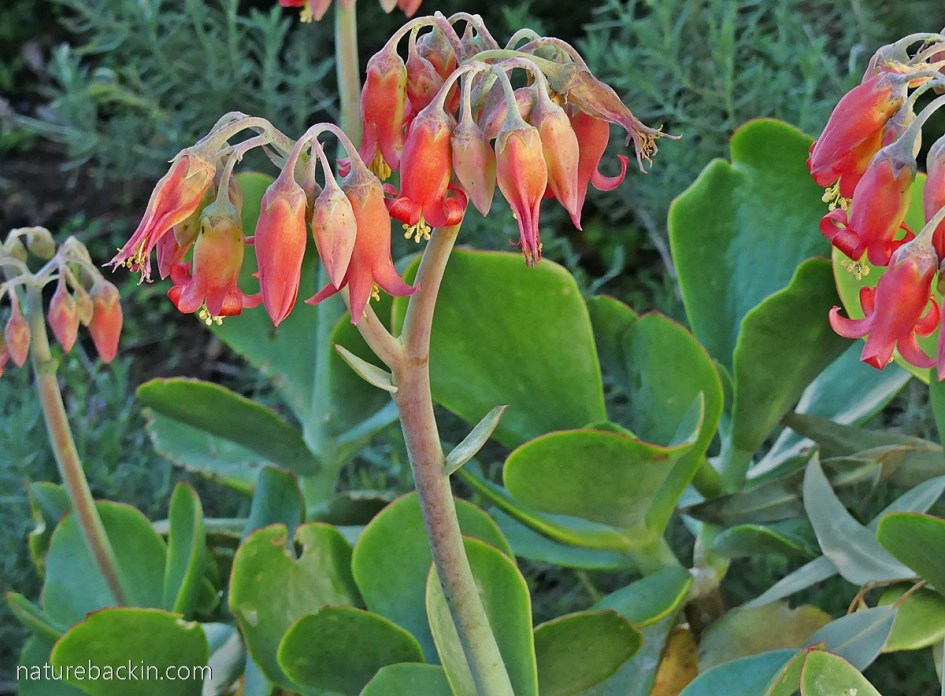
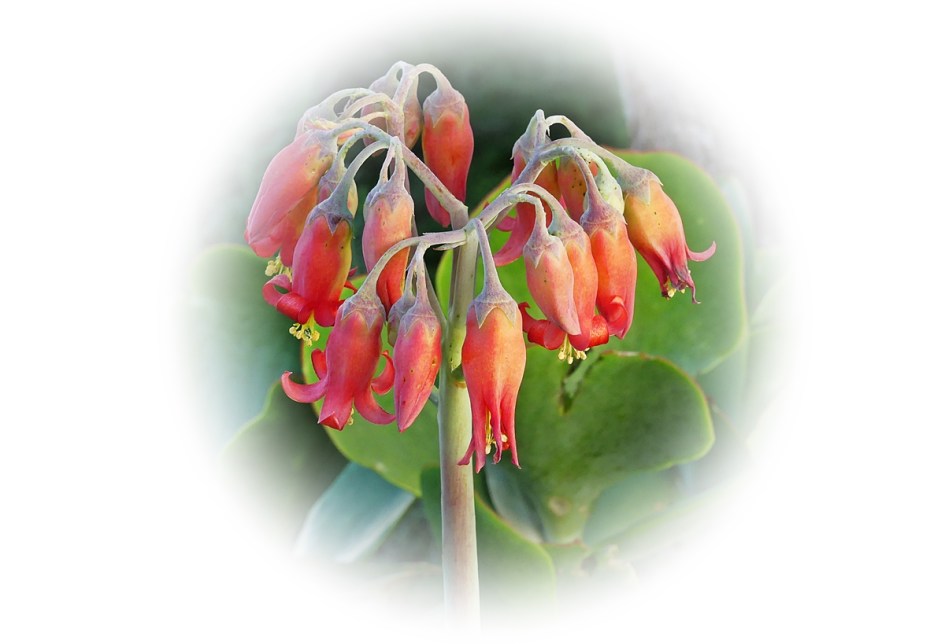
Long stalks carry clusters of tubular flowers. The flowers are usually a dusty orange but a yellow form also occurs
A member of the Crassulaceae family, the genus Cotyledon is represented by ten species in South Africa. There are five varieties of Cotyledon orbiculate. Leaf size and shape are variable and the colour may differ from shades of green to silvery grey.
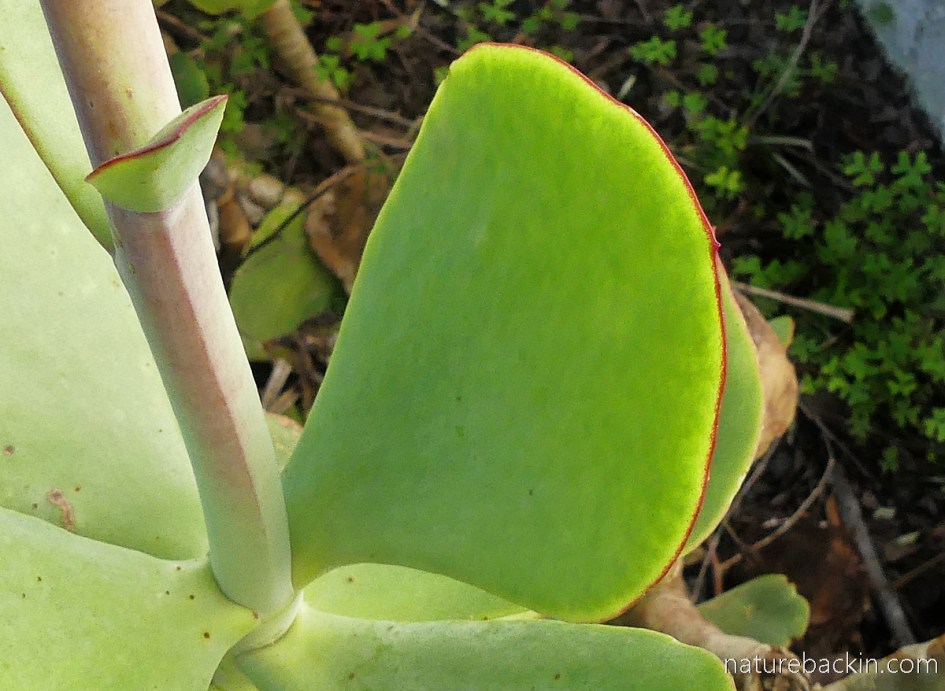
In some regions and in some varieties the leaves may be edged to a greater to lesser extent in red
Various insect pollinators are attracted to the flowers and I have seen double-collared sunbirds visiting flowers in our garden.
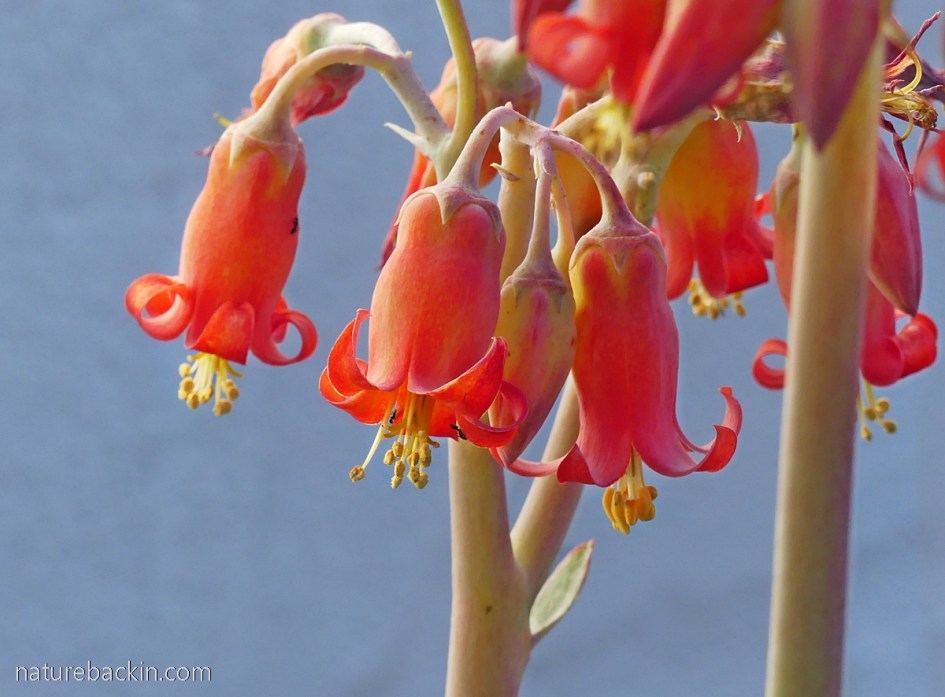
The tubular shaped flowers look to be most inviting to pollinators

The flowers have a rather different aspect when viewed from below
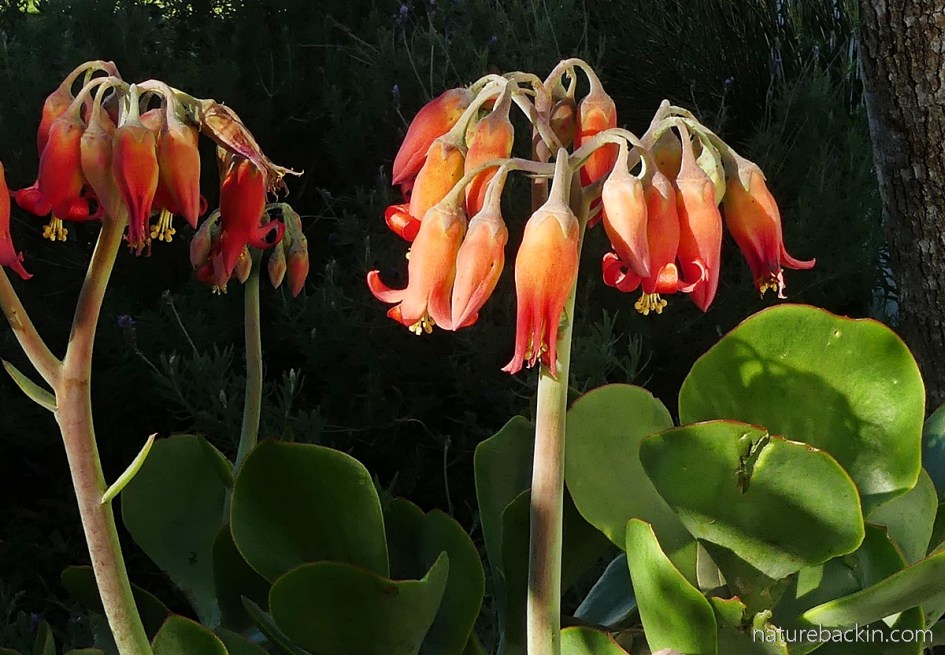
So far, the plants, with their surprisingly long-lasting flowers, seem to be surviving the exceptionally wet conditions

Tubular bells swinging in the wind
Sources:
Harris, Shireen. 2004. Cotyledon orbiculata. PlantZAfrica. South African National Biodiversity Institute (SANBI). http://pza.sanbi.org/cotyledon-orbiculata
Van Dieman, Ethan & Engel, Kristen. 2023. Western Cape: Rainfall this year is breaking records in SA’s ‘most disaster-prone’ province. Daily Maverick, 27 June. https://www.dailymaverick.co.za/article/2023-06-27-western-cape-rainfall-this-year-is-breaking-records-in-sas-most-disaster-prone-province/
Discover more from letting nature back in
Subscribe to get the latest posts sent to your email.


July 2, 2023 at 8:07 am
Such beautiful photographs of a beautiful plant, despite its common name. Thanks for this peek into your garden.
The Eastern Cape has also had good winter rains
LikeLiked by 1 person
July 2, 2023 at 8:46 pm
Thanks Mariss. It is good to know that the Eastern Cape has had some much needed rain. I hope that the dams benefit as they have done here quite dramatically.
LikeLiked by 1 person
July 1, 2023 at 6:14 am
Probably not what you were looking for in your first winter there! It seems like the weather is extreme everywhere. Here, where I live is supposed to be quite wet, but it’s been very dry. Where I work is the driest place on the island and yet everything is green from all the rainfall. Go figure! At least you’ve found some colorful flowers that are doing well. I hope things settle out in due course.
LikeLiked by 1 person
July 2, 2023 at 8:45 pm
Hi Graham – indeed the weather does seem rather contrary. The coastal area near where we moved from in KZN has just had torrential rains in their dry season and even a mini tornado (or rather land spout), which is very unusual. We all just have to roll with it as best we can it seems. It is nice to see resilient plants that are surviving regardless!
LikeLiked by 1 person
June 30, 2023 at 2:21 am
Dear Carol,
All these weather extremes are so concerning and it would be helpful to be able to distribute precipitation more evenly across the globe.
I hope some of your hardier plants will survive and/or recover. It’s good to know you are adapting a philosophical stance vis-à-vis your wet winter. I hope it will end at some point.
Best wishes,
Tanja
LikeLiked by 1 person
July 2, 2023 at 8:39 pm
Thanks Tanja – we are having a break from rain this week but other parts of the country are having some extreme stuff going on!
With the return of El Nino our region is expected to be heading for drought in the longer term so perhaps we will look back with fondness at this very wet season.
I hope your rain continues, but in moderation of course!
LikeLiked by 1 person
July 2, 2023 at 10:17 pm
Thank you, Carol. Let’s hope for more moderate weather everywhere, as unlikely as that might seem right now.
LikeLiked by 1 person
August 7, 2023 at 8:10 pm
Yes indeed.
LikeLiked by 1 person
June 30, 2023 at 12:00 am
I am so sorry for the weather you are experiencing, especially as it is your first season there. As usual, though, you have managed to show some amazing resilient plants, and I have learned something new today! Tubular bells are certainly a wonderful flower…..
Hope you are well, overall,
Cheers,
Julie
LikeLiked by 1 person
July 2, 2023 at 8:35 pm
Thanks Julie – yes I am fine and getting more settled as more (such as plumbing!) is getting sorted in our new place. I hope that your are well too.
LikeLiked by 1 person
June 29, 2023 at 9:23 pm
The bells are very pretty.
LikeLiked by 1 person
July 2, 2023 at 8:32 pm
Indeed they are!
LikeLike
June 29, 2023 at 8:45 pm
You are exceptionally wet. We are exceptionally dry. We need to make a trade!
LikeLiked by 1 person
July 2, 2023 at 8:31 pm
Yes, wish we could send you some rain, but at the same time the longer-term forecast is drought for our region …
I hope you get some rain soon.
LikeLiked by 1 person
July 3, 2023 at 3:26 am
Actually, we have, in the last few days. But much more is needed.
LikeLiked by 1 person
August 7, 2023 at 8:11 pm
I do hope you get more rain, but not too much of course!
LikeLiked by 1 person
June 29, 2023 at 8:36 pm
This must be both depressing and not a little worrying. We all seem to be having to deal with unexpected and unwanted weather events at the moment. Too little of this, too much of that, too often, not often enough …. but still you show us delights from your new patch. Let’s hope there’s much more to come.
LikeLiked by 1 person
June 29, 2023 at 8:43 pm
Hi Margaret – yes moderation in all things is not a prescription the weather abides by anywhere these days it seems.
I am trying to be philosophical about the dull windy days and aware that we must be careful what we wish for with warnings of drought to come! It certainly helps to find delight in small things.
LikeLiked by 1 person
June 29, 2023 at 8:48 pm
Definitely. A large number of plants, birds and animals are showing a high degree of willingness to adapt. But it’s still worrying that it’s not on the cards for some.
LikeLiked by 1 person
June 29, 2023 at 8:20 pm
A beautiful flower and I can see by the leaves how it got its genus name. Sorry about your garden drowning in all the rain. At least, will all that rain translate into a lush spring?
LikeLiked by 1 person
June 29, 2023 at 8:40 pm
Thanks Eliza – yes indeed I should think the spring flower season will be spectacular on the West Coast.
LikeLiked by 1 person