
Yes that’s right, a hot winter’s day. Yesterday’s high temperature of 28°C intensified the season’s dryness as we found when we ventured forth from suburbia for a walk in the Drakensberg mountains. Continue reading “Mountain walking on a hot winter’s day”

I first fell in love with a Tassel Berry tree at the Hluhluwe Game Reserve Hilltop Camp. It was old, gnarled and shaped by the prevailing wind. By contrast, the tree in our garden leads a sheltered life. Continue reading “The Tassel Berry tree: Bountiful in fruit and flower”
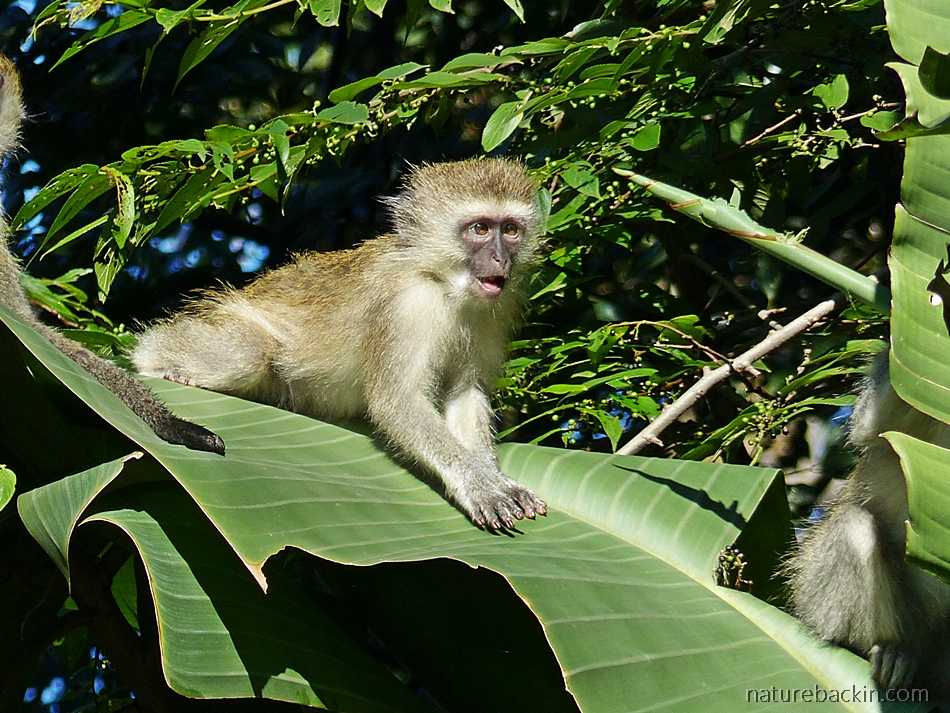
This young Vervet monkey is part of a group enjoying early morning winter sunshine while eating berries from the Pigeonwood (Trema orientalis) tree. I like how the youngster is taking advantage of a wild banana (Strelizia nicolai) leaf as a partial hammock. Continue reading “Winter in the garden: a selection of photos”
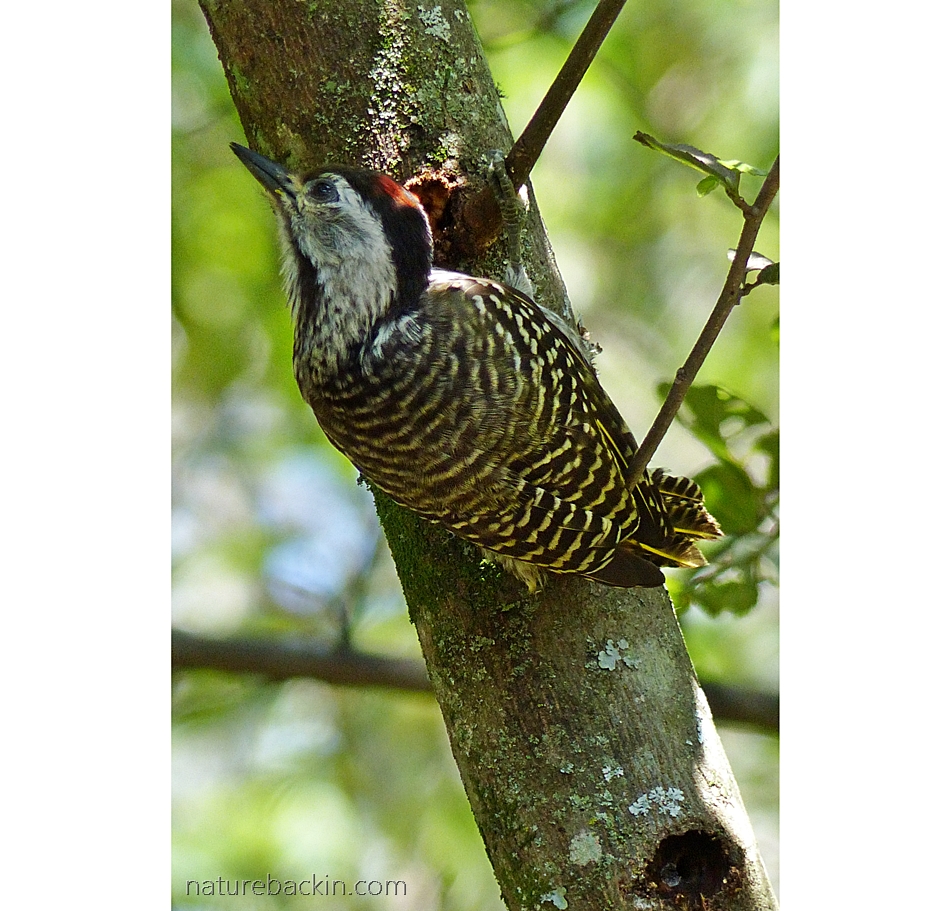
We often hear woodpeckers tap-tap-tapping on wood as they search for food in the trees in our suburb most of the year round. They are also quite vocal, but despite all this noisiness they can be difficult to see as they are mostly high up among the branches and foliage of the taller trees. Continue reading “Woodpeckers foraging two-by-two”
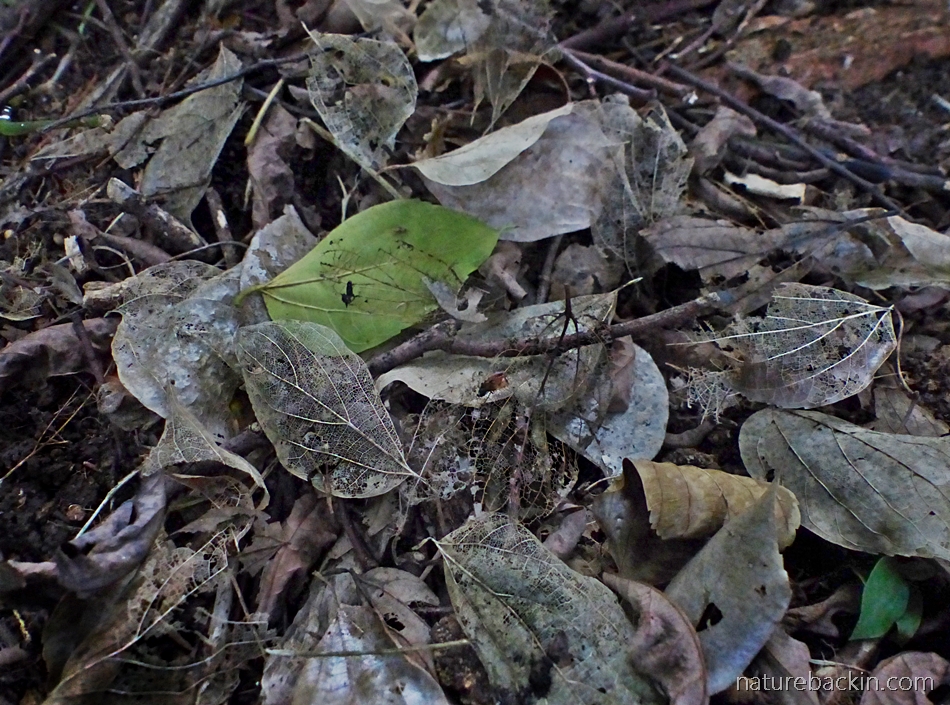
Skeletons of a botanical kind caught my attention in the form of fallen leaves that were gently disintegrating at the base of a White Stinkwood (Celtis Africana) growing just outside our garden. As the soft pulpy part of the leaves decompose and return to the soil, the leaf skeleton of intricate veins is left intact. Following the example set by the cicada terracotta army featured in last week’s post, I collected some leaf skeletons to photograph on a background of white paper. Continue reading “Skeletons in the garden Pt 2: Paisley pattern leaves”
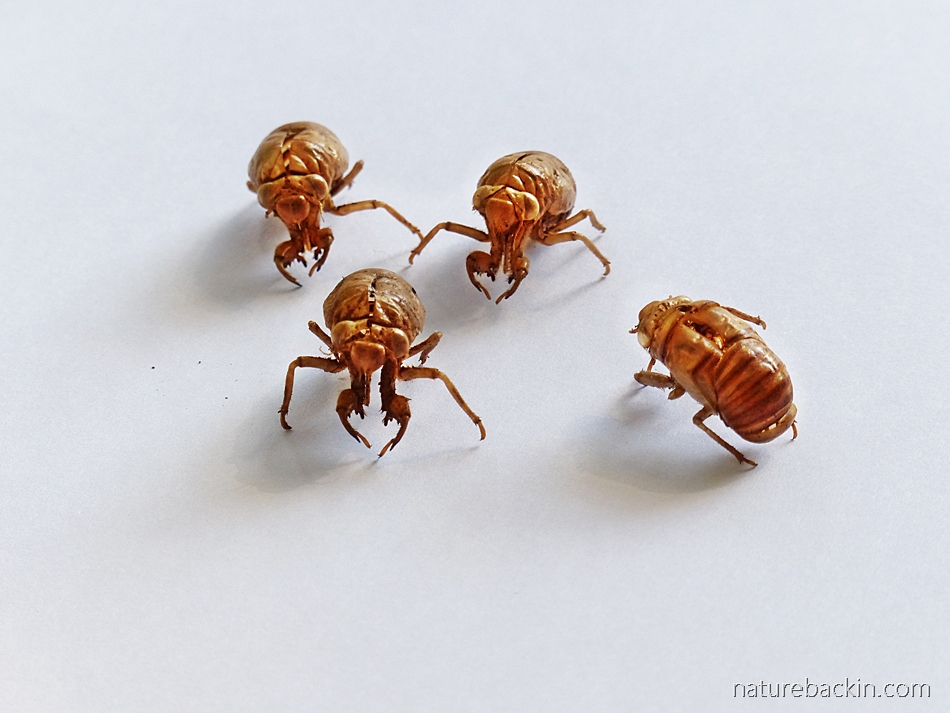
Cicadas are best known by the loud high-pitched sound adult male cicadas make mostly during the months of summer. Even though they are loud they are hard to locate and so well camouflaged they are difficult to spot, and typically we only see cicadas that have accidentally bumbled indoors. But sometimes we may come across exoskeletons left behind by cicada nymphs at the time of their last moult into their winged adult form. Continue reading “Skeletons in the garden Pt 1: Terracotta cicadas”
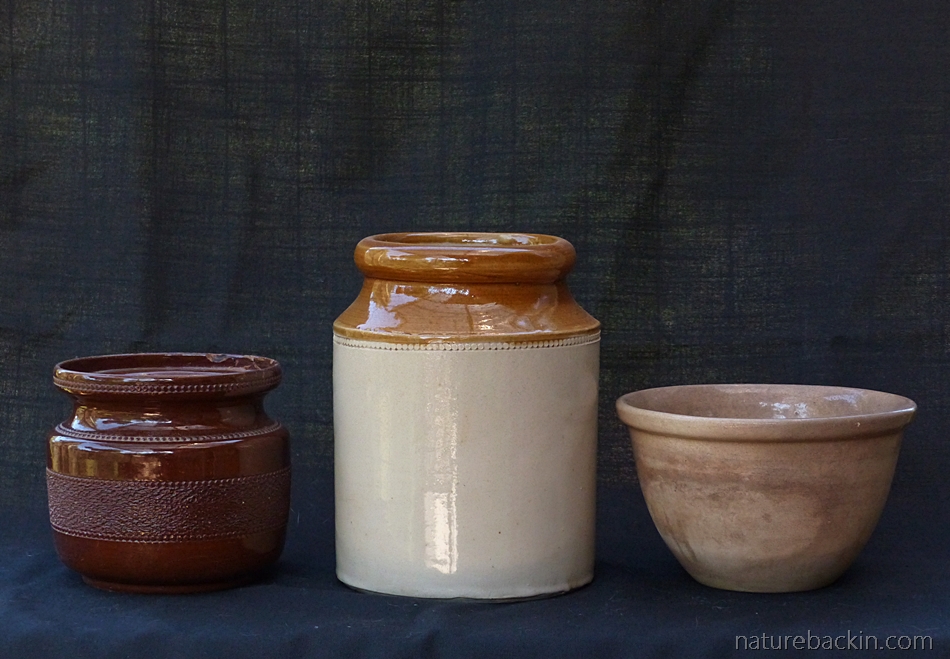
Luckily for me, both sides of my family had habits of frugality, which included saving stuff and reusing it or keeping it in case one day it might come in handy. Some folks might call it hoarding, but I value the presence of old handed-down objects, even if no longer used, which are signifiers of a time when people were more in touch with where their food came from. Continue reading “Nature’s bounty in the kitchen”

The shortest day in the south and the longest day in the north, the Solstice reminds us of the balance in the seasonal cycles.

A dainty hibiscus with delicate pink flowers graces our garden. It is a forest margin plant that grows wild mostly in the eastern parts of South Africa at low altitudes. It is nowhere near as well known as the popular exotic Chinese Hibiscus (Hibiscus rosa–sinensis) grown as an ornamental, but this indigenous South African plant is becoming increasingly adopted as a garden plant. Continue reading “The generosity of the Forest Pink Hibiscus”
