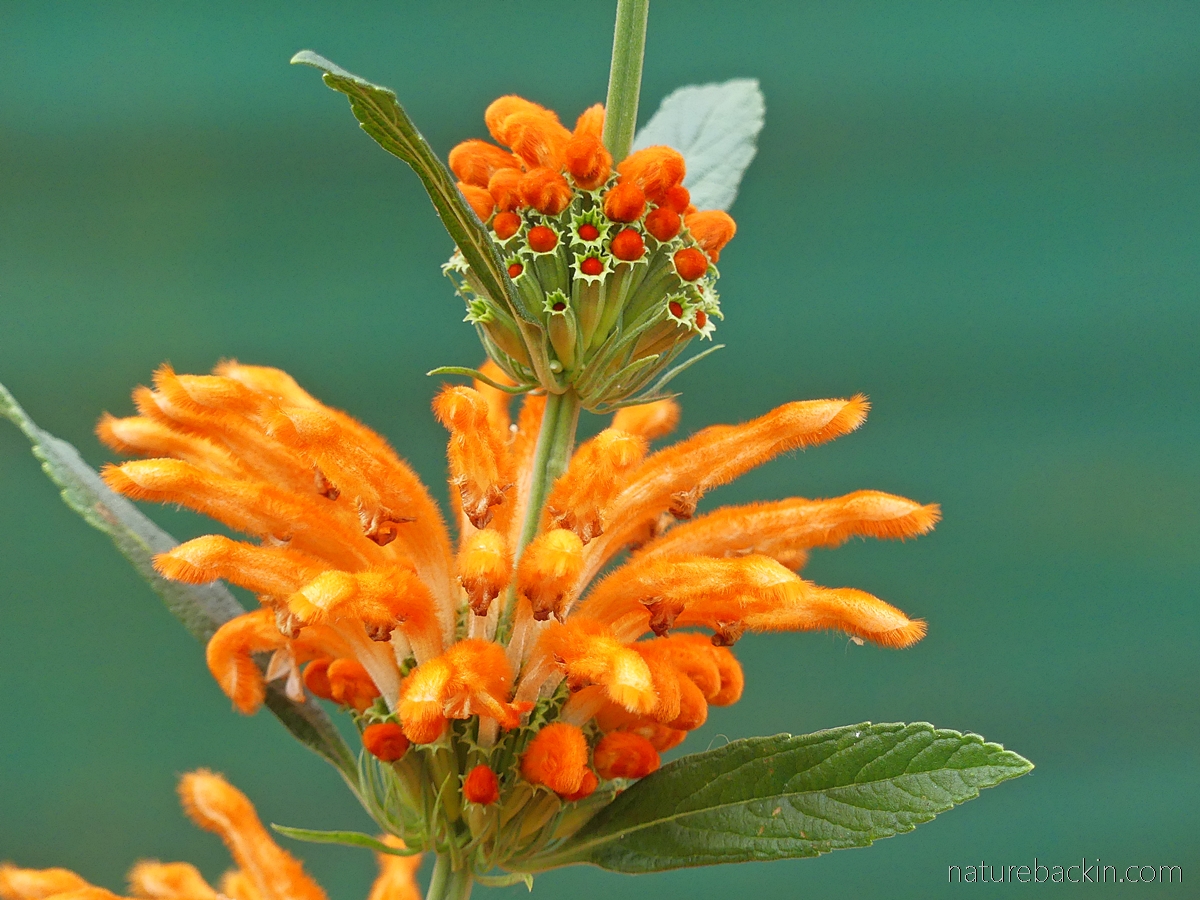
Shorter days and cooler nights bring changes as the daytime temperatures vary between hot and mild. With the dryer air the sunshine has a golden clarity enhancing the colourful winter flowers and mellow berries, and brightening the visiting birds and insects in the garden.
Continue reading “Meanwhile back in the garden: Images of early winter”
Even in conservation areas, wild animals do not always tolerate the presence of approaching vehicles or people on foot. Some are nervous and dash off immediately and others may hesitate before deciding to turn away. But happily many do grant us the privilege of a calm encounter, even continuing as they were before, ignoring intruding visitors or even showing some signs of curiosity. In some ways it’s a shame to view such wild animals mostly through the lens of a camera, but for better or worse here is a random collection of photographs that are special to me.
Continue reading “Here’s looking at you: Some special encounters with African wildlife”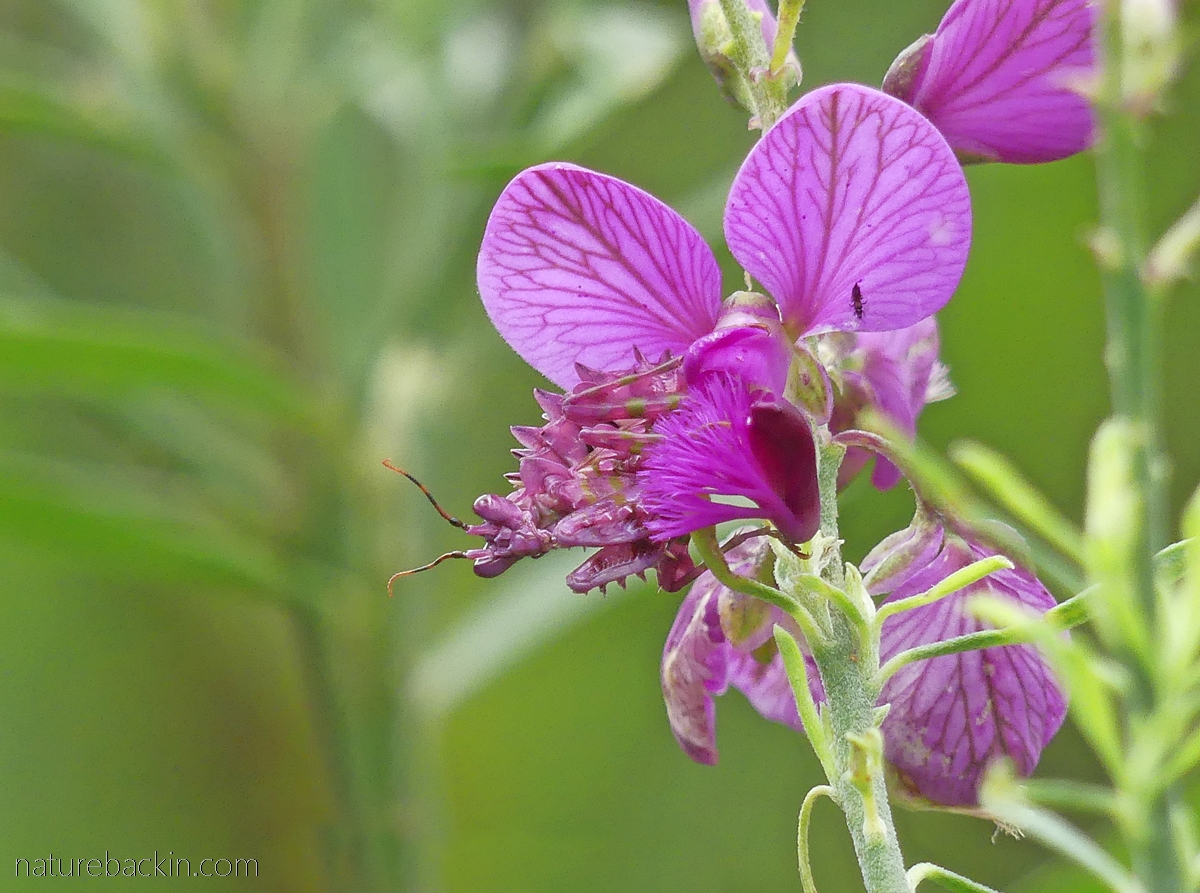
While watching a solitary bee feeding on nectar in basil flowers in the herb patch a few weeks ago, I noticed a minute spiny flower mantid nestled down on one of the flower spikes with its spiny abdomen curled up over its back.
Continue reading “Tiny spiny flower mantid nymphs hunting in autumn flowers”
Alliteration always amuses me, hence the headline – and it does describe some recent ambles around the garden. Peering as I go, I am sometimes amazed at what I come across – often in plain sight but so easy to overlook.
Continue reading “Serendipity, scrutiny and surprises in the garden”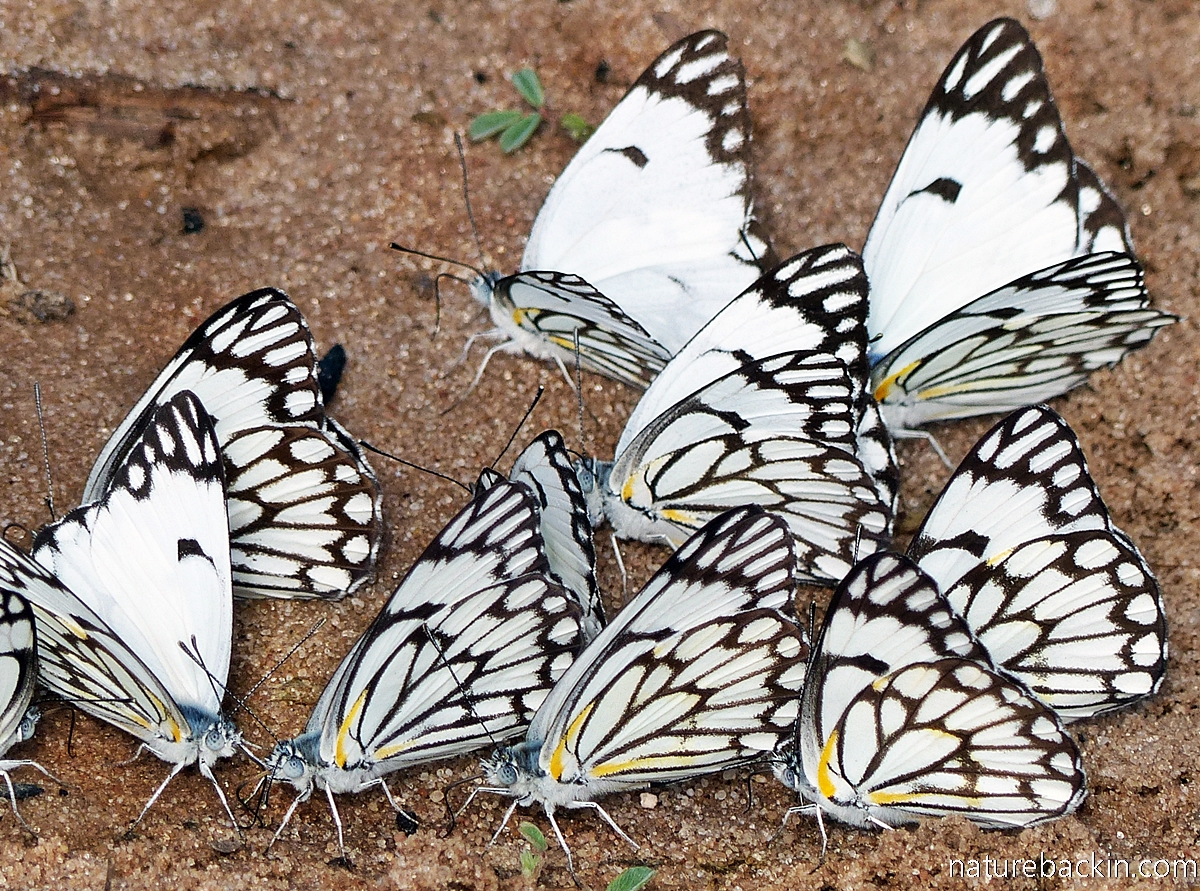
The Kgalagadi desert’s butterflies featured in this post resonate with two posts from last year reflecting on resilience and fragility (symbolised by desert flowers) and the need for hope (symbolised by butterflies). It is just over a year since South Africa recorded its first confirmed case of Covid-19 and those posts were in response to the burgeoning uncertainty and fear as the pandemic’s inexorable infection rates escalated across the world.
Continue reading “Butterflies of the Great Thirstland”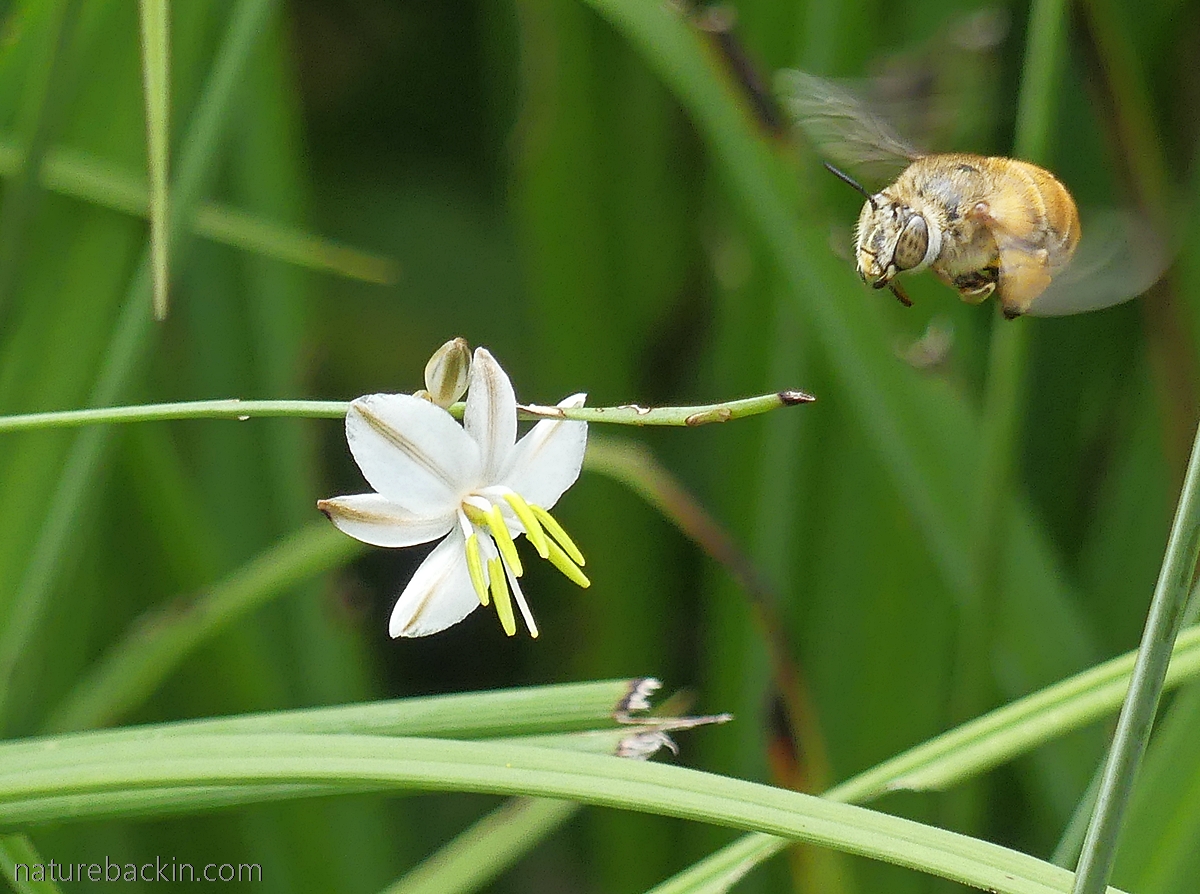
Recently I spotted a lovely bee flitting about as it fed from small anthericum flowers in the garden. Remarkably my camera was handy and I managed to snap a few photos. In an unusual turn of events, the bee obligingly stopped to preen allowing me to get a closer look.
Continue reading “Befriending solitary bees”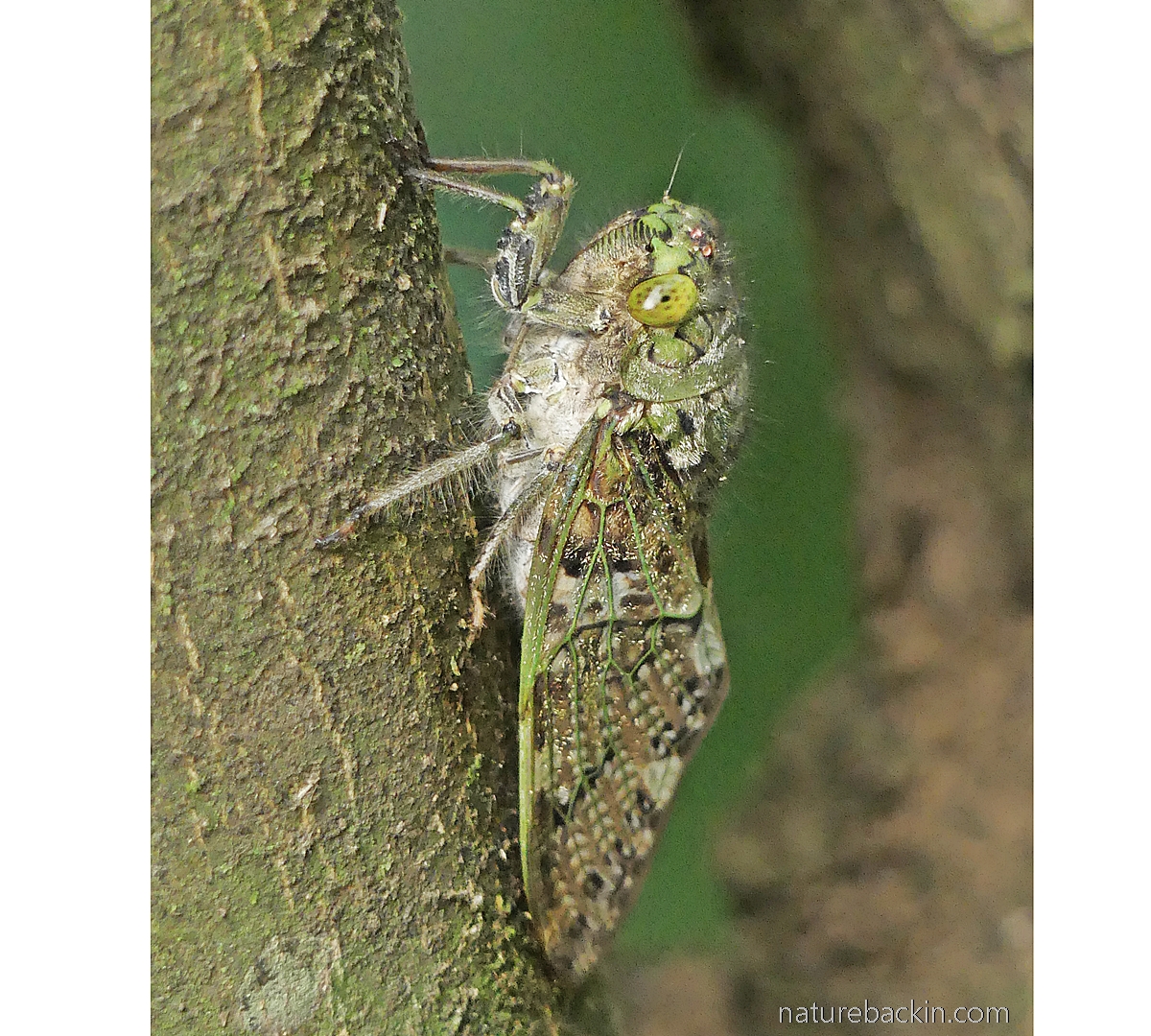
So loud and so tantalizingly near, cicadas tend to fall silent when approached, and their camouflage colours make them hard to see. But recently I was in luck as after hearing a faint cicada-like squeak from a tree, I stood still and scanned the stems of the tree methodically and then suddenly several cicadas became surprisingly obvious.
Continue reading “Singing cicadas seen at last”
They may be tiny but they are plentiful, and ants make up a significant part of the diet of southern tree agamas. For agamas, catching ants seems relatively easy: find an ant pathway and waylay the passing ants. Simply pick them out one at a time using the tongue to scoop and swallow.
Continue reading “Southern tree agama ambush hunting and eating ants”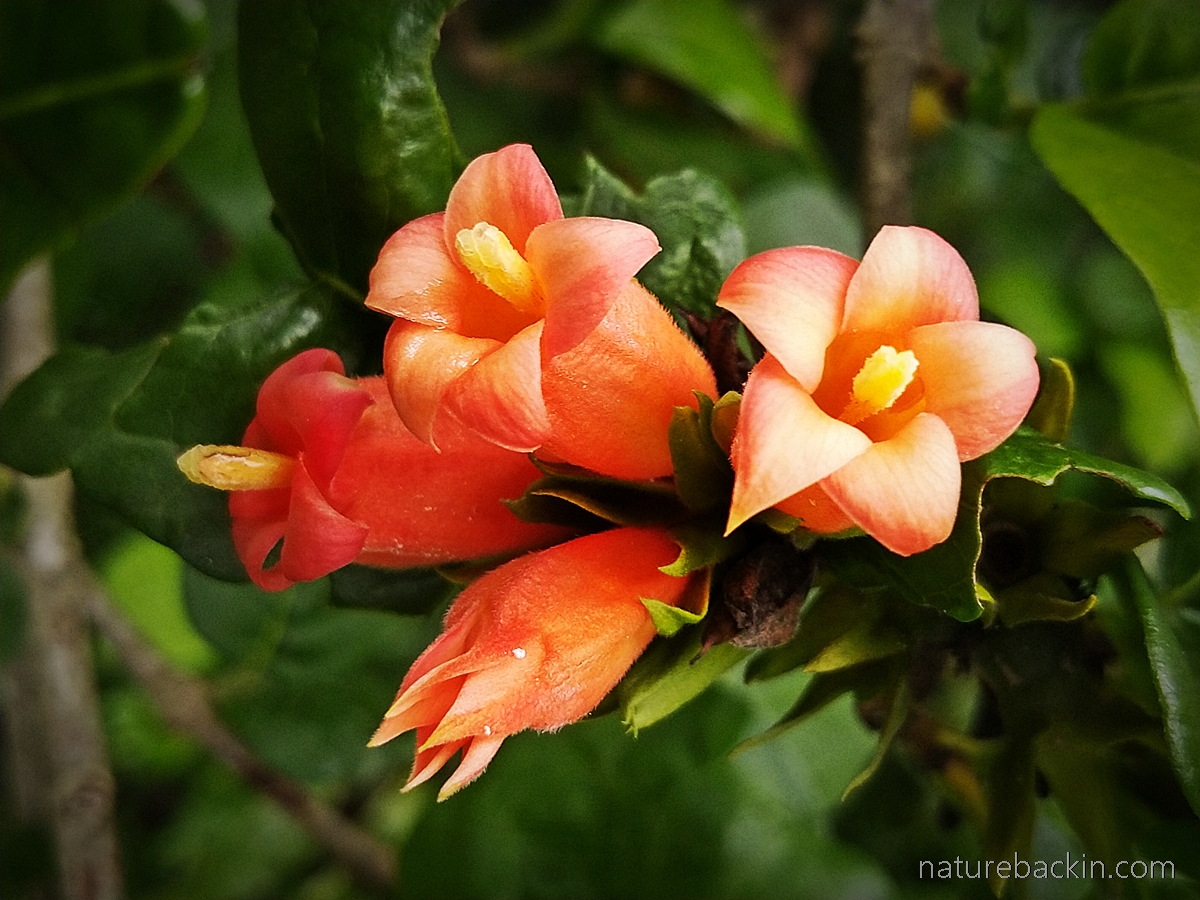
As it is easy to carry tucked into a pocket, having my phone with me allows me to be impulsive and experiment with photographing plants and creatures that catch my eye when I am out in the garden.
Continue reading “Phoning home: Lockdown nature photos on my phone”