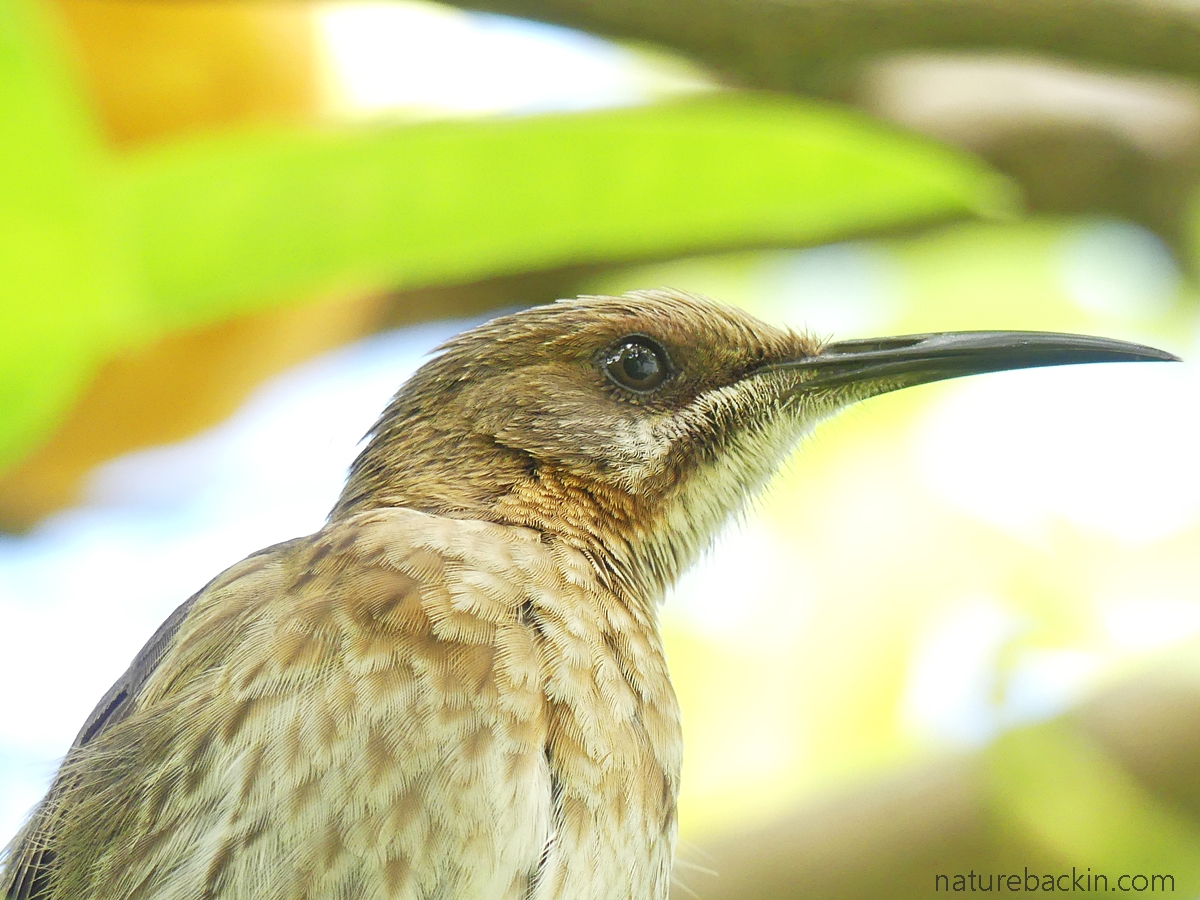
This summer, charismatic Cape sugarbirds (Promerops cafer) have been regular visitors to our garden. Named sugarbirds as they are largely nectar feeders, they are closely associated with proteas for food and shelter. Cape sugarbirds occur only in the fynbos regions of the Western Cape and into parts of the Eastern Cape.
Continue reading “Cape sugarbird: Summer visitors to our garden”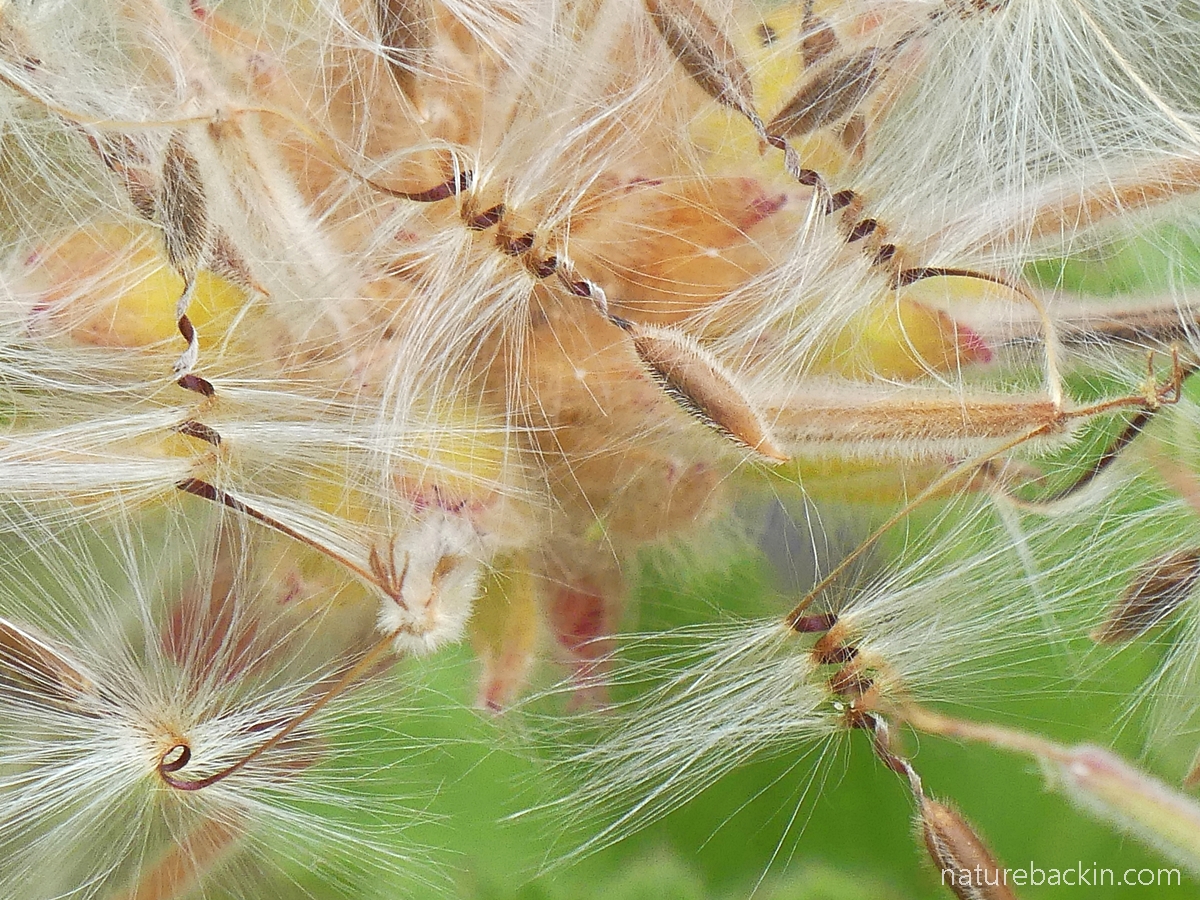
Of the 270 naturally occurring species of pelargoniums in the world, about 219 species occur in South Africa. Of these, I focus here on just two – and one hybrid – that grow in our garden. And a true geranium also makes an appearance. Be it the leaves, the flowers or the seeds, pelargoniums are always interesting to photograph.
Continue reading “Pelargonium flower portraits and a geranium too”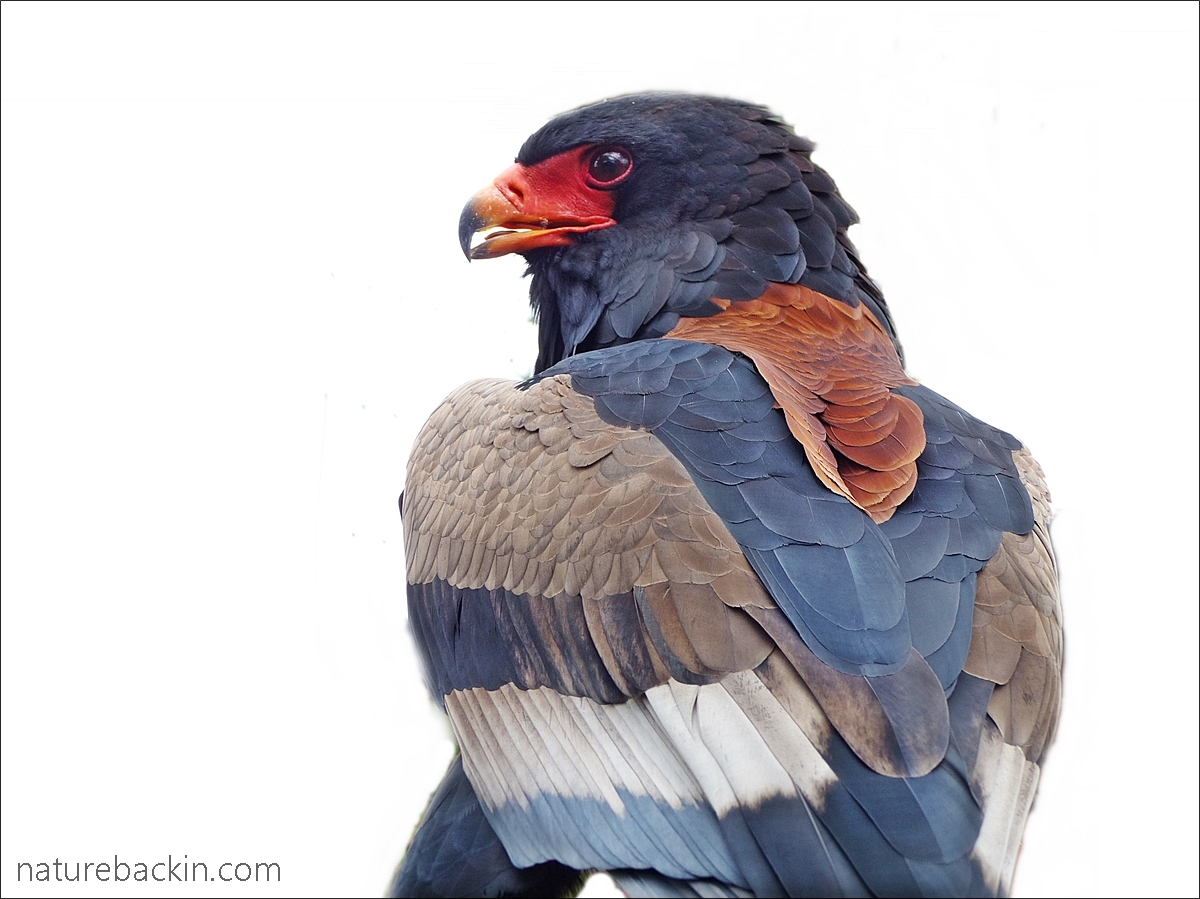
In the nick of time before 2024 draws to a close, lets celebrate BirdLife South Africa’s Bird of the Year, the gorgeous eagle known as the bateleur. By championing an individual species each year, BirdLife South Africa hopes that the year-long information campaigns highlight the conservation importance of each named species and of South Africa’s amazing birdlife more generally. The bateleur is listed as an endangered species and so it needs all the help it can get.
Continue reading “The Bateleur Eagle – South African Bird of the Year 2024”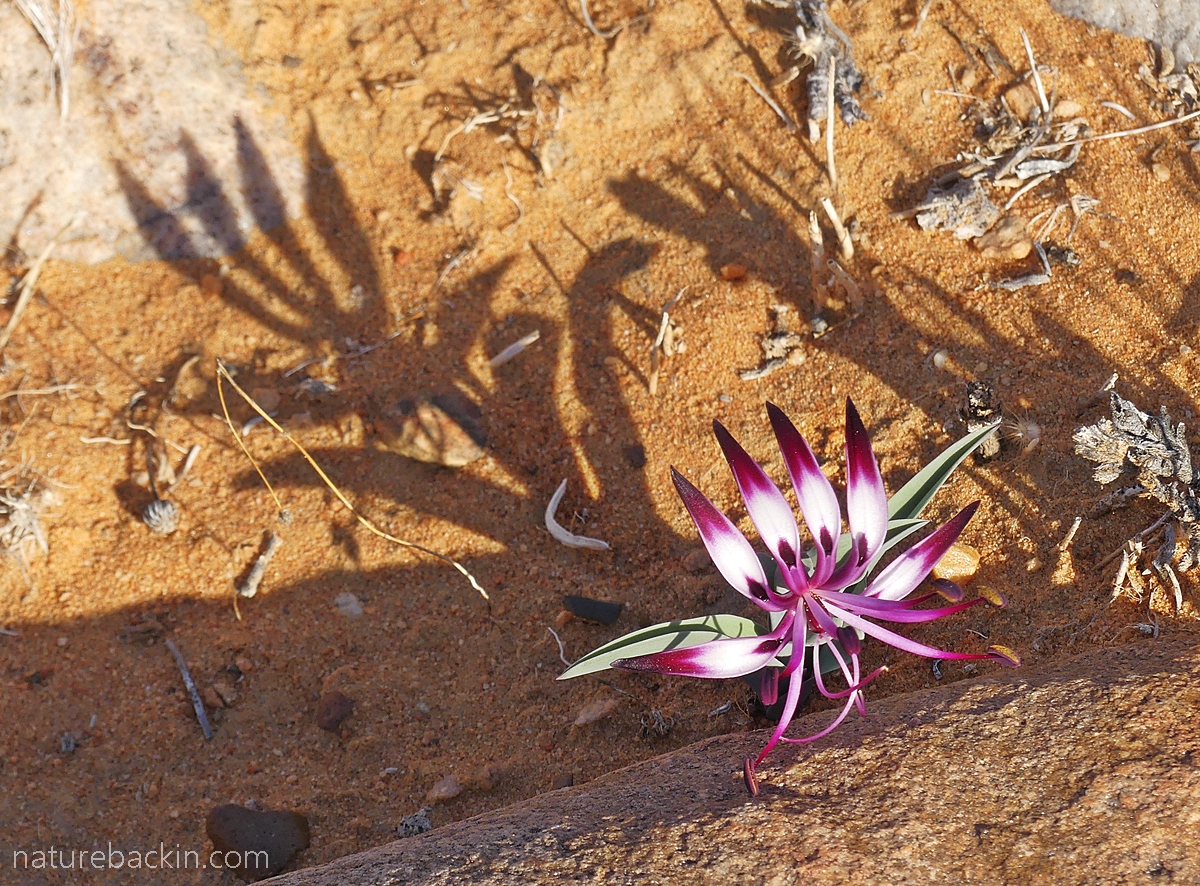
Arid it is in the Tankwa Karoo, but there is life to be found on the stony ground if one slows down and refocuses – generally a satisfying thing to do, and especially so when travelling to new places. And the rocks and stones are interesting not only to geologists and archaeologists. Their variety in colour, form and density are interesting to anyone – though the stones do have their drawbacks for those travelling by road!
Continue reading “Tankwa Karoo Part 2: Plants and birds and rocks and things”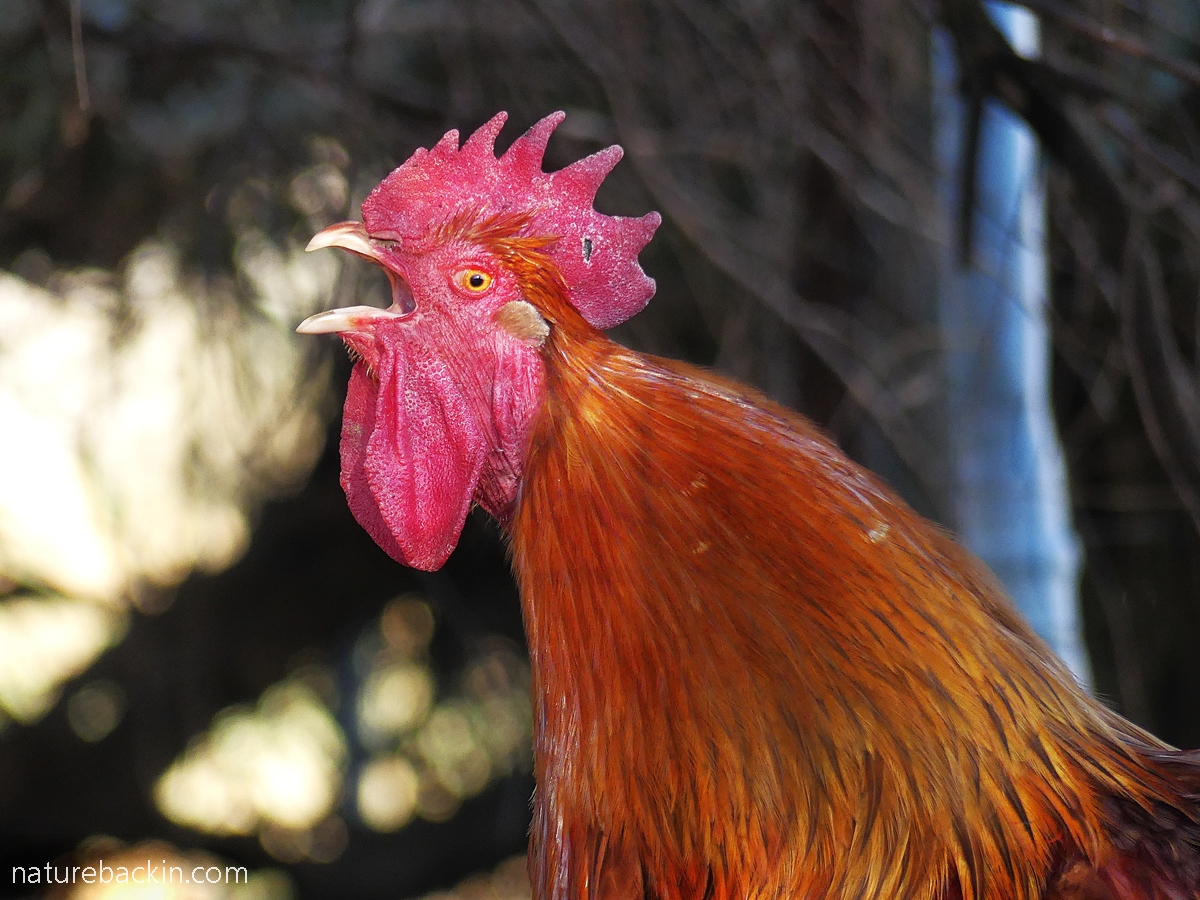
A friend kindly took us on an unexpected road trip to the Tankwa Karoo in late June this year. Who would think on a trip to the arid lowlands of the Tankwa basin that is surrounded by rugged mountain ranges, we would come away with photographs of farmyard animals? We stayed at self-catering farm accommodation on our route, where homesteading activities provided picturesque pastoral escapism somewhat at odds with not only the aridity but also the harsh realities of farming.
Continue reading “Tankwa Road Trip: Farmyard Animals and some history”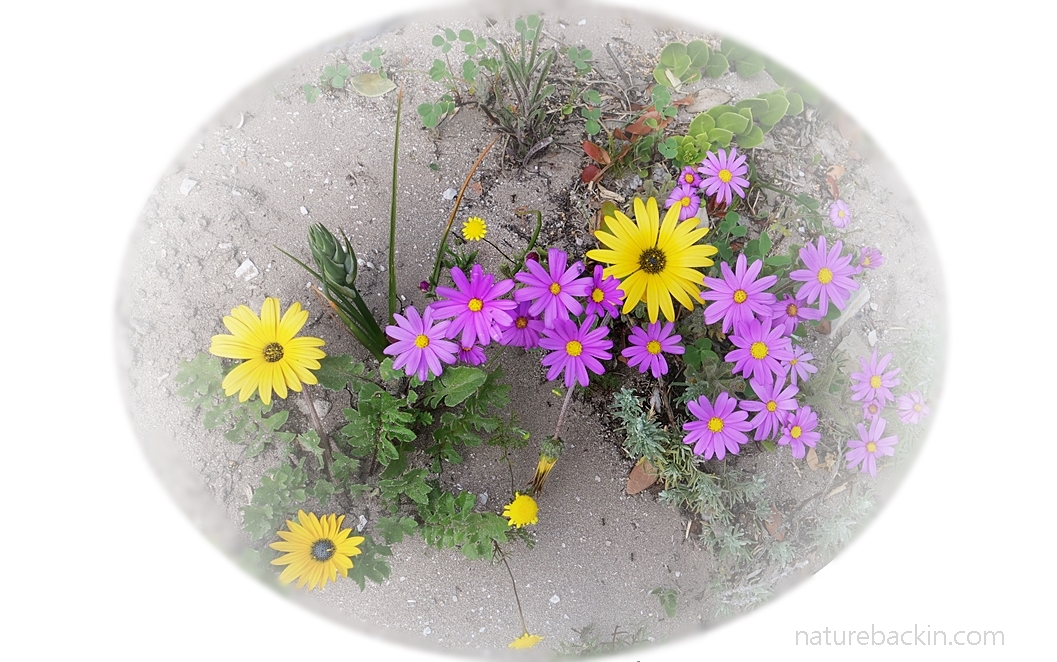
Spring in our winter-rainfall area is rich with a huge diversity of wild flowers. We recently revisited the coastal area around the small Danger Point peninsula near Gansbaai in the Overberg, mostly to see the spring flowers that grow along the roadsides and down to the seashore.
Continue reading “Reframing flowers in the Fynbos Biome”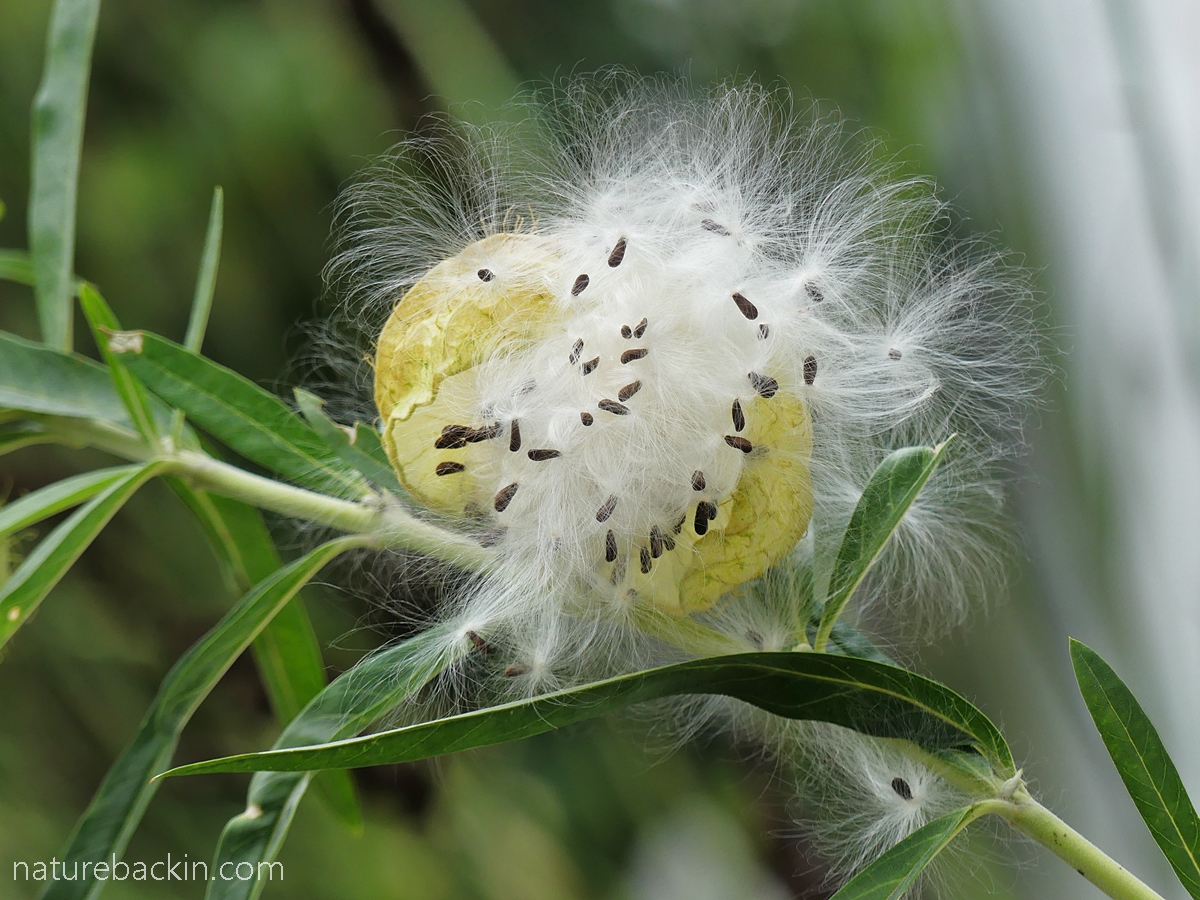
I am always happy when volunteer plants in our garden turn out to be interesting, non-invasive and preferably indigenous. One that is all three (or so I first thought!) is a species of milkweed, which is known colloquially as balloon milkweed, balloon wild cotton or hairy balls. One of its attributes is that it is a host plant for the African monarch butterfly.
Continue reading “Balloon milkweeds hosting butterflies”
Our small garden attracts a number of species of birds across the seasons. Here are some photos I snapped of visiting birds over the past few months. The delicately hued laughing doves (Spilopelia senegalensis) are among the more numerous of our visitors.
Continue reading “Bird visitors brightening our garden in the Overberg”
A day trip to the De Hoop Nature Reserve could not possibly do justice to its wonders from the high sand dunes near the coast to the mountains on its inland side, its endangered lowland fynbos vegetation and the 12 km-long (7,5 miles) vlei (lake) that is rich with waterbirds. Plus, its rocky shoreline adjoins a marine protected area in the Indian Ocean. De Hoop, home to Cape Nature’s Whale Trail, offers remarkable land-based whale watching opportunities from June to September each year.
Continue reading “Day trip to De Hoop Nature Reserve in the Overberg”